
Marketing on social media can feel overwhelming, especially for beginners. With new platforms emerging and algorithms constantly evolving, it’s only natural to wonder: Is Facebook marketing and Instagram marketing still worth your time in 2026?
The short answer is a definitive yes. Together, Facebook and Instagram remain two of the most powerful and accessible platforms for businesses of all sizes.
As core pillars of Meta’s ecosystem, they offer unmatched reach, flexible content formats, and cost-effective advertising options that make social media marketing for beginners achievable, even with limited experience or budget.
This guide is your practical introduction to social media marketing for beginners, helping small businesses understand how Facebook and Instagram work and how to start marketing effectively in 2026.
Why Social Media Marketing Still Matters in 2026
For many businesses, an effective social media strategy in 2026 remains a cornerstone of digital marketing. Why? Because your audience is already here.
Users continue to spend significant time scrolling, watching videos, and engaging with brands through social feeds, creating a direct channel for building visibility, trust, and long-term relationships.
Within this landscape, Facebook and Instagram alone reach billions of users globally through Meta’s network, and they allow businesses to combine organic content with affordable paid promotion – making them especially attractive for small businesses and first-time marketers.
Example:
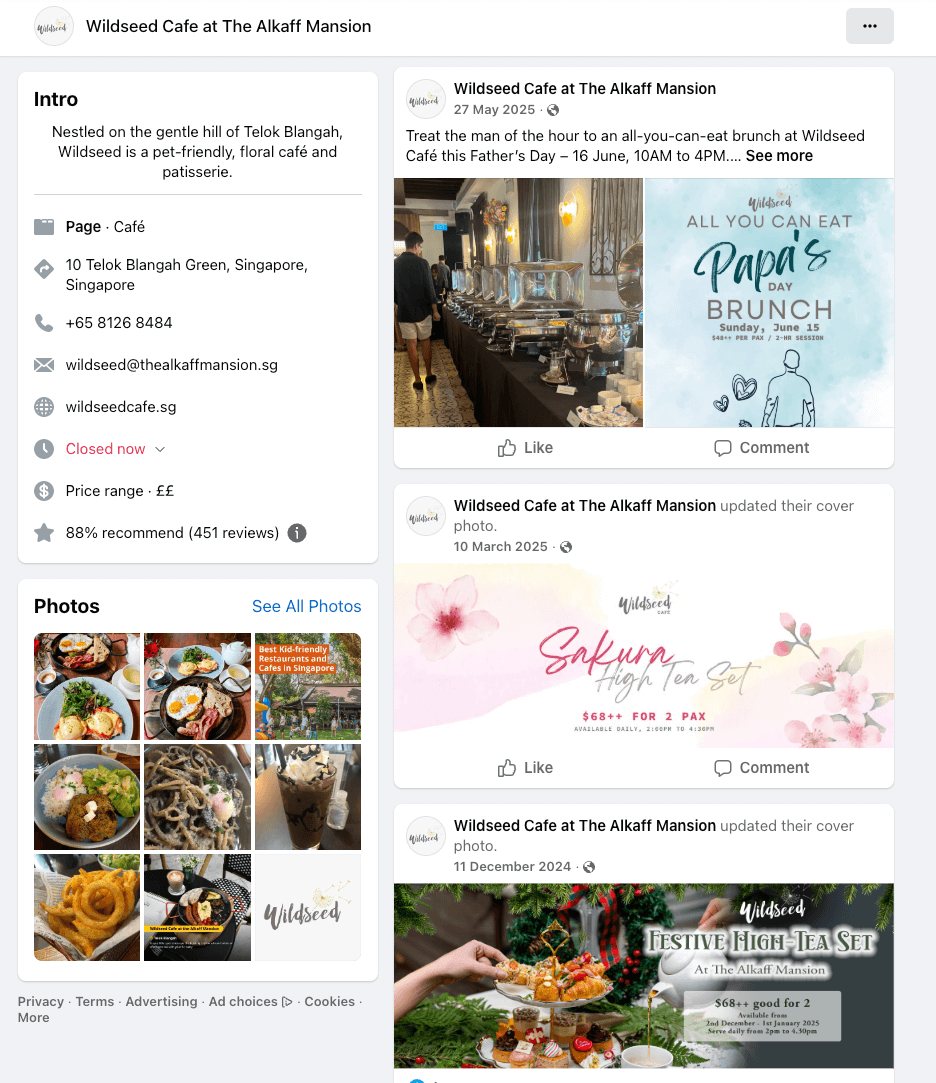
Wildseed Café Instagram
Wildseed Café in Singapore utilise Instagram to share vibrant visual content, from brunch highlights to behind-the-scenes shots, while using Facebook Pages to announce new menu launches and special events, connecting with local audiences across platforms.
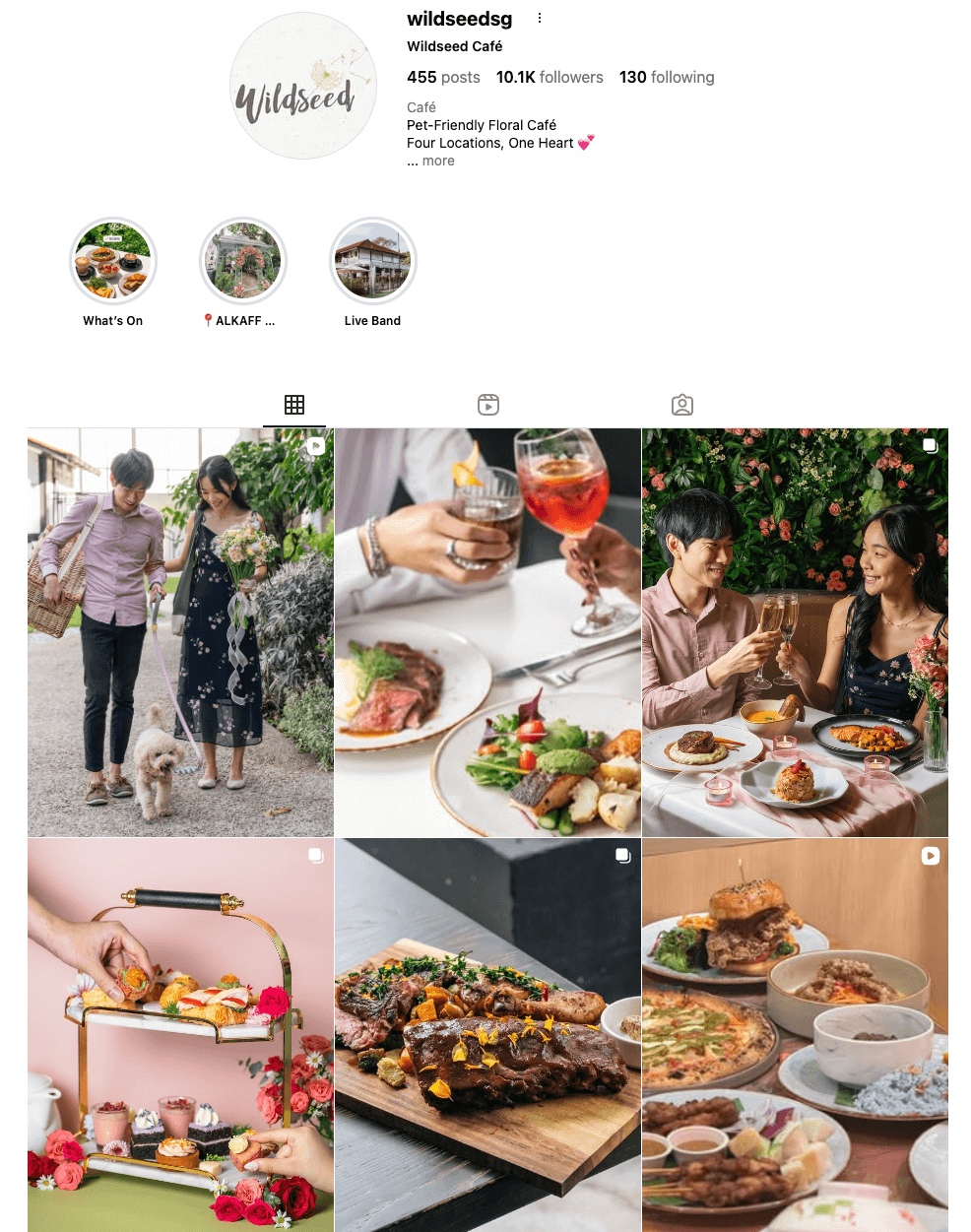
Wildseed Café Facebook
This dual-platform strategy helps build familiarity, encourages repeat visits, and stays top-of-mind without relying on expensive advertising.
It’s this combination of storytelling and accessibility that keeps Facebook and Instagram central to social media strategy in 2026.
Understanding Facebook Marketing Basics
Facebook marketing is fundamentally about building relationships through conversation, community, and trust.
At its core, it involves using Facebook ads, Pages, posts, Groups, Events, and polls to connect with audiences in a more personal and interactive way.
Why Facebook Works for Business
- Broad, diverse audience: Ideal for local businesses, services, and brands that want ongoing engagement
- Built-in community tools: Groups and Events help foster loyalty and meaningful discussion
- Focus on value, not polish: Rewards content that sparks conversation and feels useful
Simple Starter Strategies for Beginners
You don’t need to overcomplicate it. Start with these easy tactics:
- Post regular updates
- Share helpful tips or news
- Run quick polls or ask questions
- Highlight customer stories or reviews
See It in Action
Here are some real-life examples you can explore to understand how these features work:
- Facebook Pages and Posts: Check out Wildseed Café’s Summerhouse page or Alkaff Mansion page to see posts, visuals, and engagement in action.
- Events: Live community event posts in Singapore, such as a weekend gathering at local venues or a pop-up market invitation, show how events are listed and promoted on Facebook.
- Groups: Singapore Sales, Discounts & Promotions — a large community where members share deals, offers, and promotions is a good example of engagement and discussion.
- Poll-style discussions: Many groups have interactive discussions where members ask for opinions or preferences, similar to polls. For example, community threads in groups show how feedback and engagement are collected.
Tip: Facebook favours content that starts conversations. Think “useful” over “perfect.”
Now that you know how to build community on Facebook, let’s explore the visual world of Instagram marketing.
Understanding Instagram Marketing Basics
Instagram marketing is all about visual storytelling, instant engagement, and discovery. It is designed to capture attention quickly and communicate brand personality through images, short-form video, and interactive content.
Why Instagram Works for Business in 2026
In 2026, Instagram continues to prioritise tools such as Reels, Stories, and in-app shopping, making it a strong platform for discovery and brand awareness.
These interactive or “immersive” formats fully engage users, encouraging them to watch, swipe, tap, or participate rather than just scroll past.
Examples include short videos (Reels), full-screen Stories with stickers or polls, carousel posts you swipe through, and Live videos where audiences can comment in real time.
What Really Engages Instagram Users
Users tend to engage with content that feels authentic, aspirational, and human. Often, a casual behind-the-scenes moments often outperform overly polished advertisements.
Successful Instagram marketing is less about perfection and more about consistency, authenticity, and personality.
Brands that show how they work, what they stand for, and who they serve tend to build stronger emotional connections.
For beginners, this means focusing on clear visuals, simple messages, and regular posting habits rather than chasing trends relentlessly.
Key Strategy for Beginners: Start with Reels
One of the most effective ways to grow organically is through Instagram Reels marketing. Short, engaging videos can dramatically increase your visibility, attract new audiences, and build your brand—all without a paid ad budget.
Simple starter Mindset
For beginners, this means:
- Focus on clear, high-quality visuals
- Keep your message simple and true to your brand
- Build a regular posting habit
- Be authentic rather than chasing every trend
See It In Action
Here are some real Instagram accounts beginners can explore to see business content in action:
- @beyondthevines: Singapore fashion brand with a cohesive visual feed and engaging product storytelling.
- @qanvast: Interior design platform using imagery and Stories to inspire homeowners.
- @barrys.sg: Fitness lifestyle content with community posts and UGC (user-generated content).
- @chope.sg: Food and dining discovery content that visually attracts local Instagram audiences.
- @xiaxue: Influencer profile showing personal branding and engagement strategies that brands leverage for collaborations.
Pro Tip: Each of these links highlights different ways businesses use Instagram:
- Reels for attention-grabbing short video content
- Feed posts for product showcases and branded imagery
- Stories to share updates and connect on a personal level
- Shop features to turn visual content into sales opportunities
Use these examples as a blueprint. Observe what they post, how often they post, and how they engage with their audience to shape your own Instagram marketing strategy.
Now that you’ve seen how Instagram captures attention, let’s compare both platforms to help you decide where to focus in our next section: Facebook vs Instagram for Business.
Facebook vs Instagram for Business — Which Platform Fits Your Goals?
Choosing between Facebook vs Instagram for business comes down to two things: who you’re talking to and what you want to achieve.
Let’s break it down so you can decide where to focus, or if you should use both.
Facebook: Built for Community & Conversation
- Best Audience: Broad, slightly older, community-oriented users.
- Best For: Lead generation, customer service, local outreach, and long-term relationship building.
- Ideal Industries: Real estate, education, professional services, local retail, B2B.
- Engagement Style: Discussions, comments, events, and group interactions.
Example: A real estate agency shares neighbourhood updates and hosts Facebook Live Q&As to build trust and generate leads.
Instagram: Driven by Visual Discovery
- Best Audience: Younger, trend-aware users who love visual inspiration.
- Best For: Brand awareness, visual storytelling, product showcasing, and trend engagement.
- Ideal Industries: Fashion, food, travel, beauty, lifestyle, creative arts.
- Engagement Style: Likes, saves, shares, Reels, Stories, and influencer collaborations.
Example: A fashion brand uses Reels and influencer posts to create buzz and attract a style-focused audience.
Why Many Brands Use Both Platforms
You don’t always have to choose. A smart Meta marketing strategy uses both platforms to cover the entire customer journey:
- Instagram grabs attention with eye-catching Reels and Stories.
- Facebook nurtures that interest with deeper content, events, and community building.
- Together, they move people from discovery to decision, seamlessly.
Tip: Start where your core audience is most active. Then, expand to the other platform to build a complete, funnel-ready presence.
Now that you know where to post, let’s explore what to post. Next up: the types of content that perform best on each platform.
The Types of Content That Perform Best
Knowing what to post is half the battle. While every brand is unique, some content formats consistently win on Facebook and Instagram.
Let’s explore what works best on each platform so you can post with confidence.
Facebook Content Types
Facebook rewards content that encourages conversation and community engagement.
Here’s what to try first:
Informative Posts
- Share tips, tutorials, or news that your audience finds useful.
- Example: A local café posting brewing tips or a “How to make the perfect latte” guide.
Videos
- Short clips or longer content introducing products, explaining services, or showcasing behind-the-scenes moments.
- Example: A bakery filming the bread-making process or a restaurant sharing a chef’s weekly special.
Community Stories & Live
- Engage your audience in real time with live Q&As, interactive sessions, or updates.
- Example: A fitness studio hosting a Facebook Live class or answering nutrition questions.
4Events
- Announce workshops, tastings, or promotional campaigns that encourage attendance and interaction.
- Example: A bookstore hosting a weekend book-signing event.
Polls and Questions
- Interactive posts asking for opinions or preferences increase engagement and help businesses gather feedback.
- Example: A boutique asking followers which seasonal collection they prefer.
Instagram Content Types
Instagram is visual-first. Think short, engaging, and scroll-stopping:
Reels
- Short, engaging videos perfect for demonstrating products, sharing tips, or entertaining content.
- Example: A fashion brand showing “3 ways to style a jacket” or a café highlighting latte art in 15 seconds.
Carousel Posts
- Swipeable posts that allow multiple images or videos in one post. Ideal for tutorials, storytelling, or showcasing multiple products.
- Example: A skincare brand showing a step-by-step skincare routine across 5 slides.
Product Showcases
- High-quality images or videos highlighting features, benefits, or usage.
- Example: A home décor shop posting visually styled vignettes of new furniture pieces.
Lifestyle Content
- Posts showing your brand in real-life scenarios, emphasising mood, values, or experiences rather than just the product.
- Example: A travel agency posting images of travellers enjoying curated experiences.
Stories & Interactive Stickers
- Temporary content that disappears after 24 hours; use polls, quizzes, countdowns, or sliders to encourage engagement.
- Example: A café posting a poll asking, “Which new dessert should we launch next week?”
Key Takeaways for Beginners
- Focus on clarity, value, and consistency rather than perfection.
- Repurpose content where possible (a Reel could also be shared as a post, or an event announcement can be adapted for Stories).
- Observe what competitors or local brands post to gather inspiration and ideas.
- Engagement is just as important as reach; always encourage conversation and feedback.
Pro Tip: Start with one content type per platform and master it before adding more. Consistency beats complexity every time.
Now that you know what to post, let’s walk through how to get started. Next up: your step-by-step launch plan.
How to Get Started With Facebook and Instagram Marketing
Ready to launch? Before you post, you’ll need to set up the right foundation. Here’s your no-fluff guide to getting started the right way in 2026.
Step 1: Create Your Business Accounts
Use a Facebook Page and an Instagram Business or Creator Account—not personal profiles. This unlocks essential tools like analytics, shopping features, and Meta Business Suite.
- Create a Facebook Business Page: Create yours here.
- Instagram Business Account: Switch using the official guide.
- Tip: Business accounts are free and give you access to promotions, insights, and scheduling tools.
Step 2: Optimise Your Business Profiles
A complete profile builds trust. Here’s what to include:
For Both Platforms:
- Upload profile and cover photos
- Add business name, username, and contact info
- Write a clear bio/description
- Add call-to-action buttons (Book Now, Contact, Shop)
Instagram Only: Create Story Highlights to showcase best content, FAQs, or promotions.
Tip: The platforms will guide you—just follow the prompts.
Step 3: Connect to Meta Business Suite
Link both accounts to Meta Business Suite, your all-in-one dashboard.
You Can:
- Schedule posts and Stories in advance
- Track insights (reach, engagement, demographics)
- Manage comments and messages from one inbox
- Oversee ads and promotions
Tip: Think of it as your central command for both platforms.
Step 4: Plan & Post Your First Content
Start simple. Consistency beats complexity.
- Weekly Goal: 2–3 quality posts per week is enough
- Focus on clarity, value, and consistency
- Experiment with content types:
- Facebook: posts, videos, polls, events, live sessions
- Instagram: Reels, carousel posts, Stories, product showcases
- Engage with followers genuinely: reply to comments, messages, and questions
Remember: Your first post doesn’t need to go viral, it just needs to exist.
Step 5: Review, Learn, and Adjust
Marketing is a cycle. Improve as you go.
- Check insights weekly to see which posts get the most engagement
- Test different formats, captions, and posting times
- Refine your strategy gradually based on audience behaviour
Tip: Marketing is iterative — small improvements over time drive real results.
You’re now set up for success. But the digital world keeps changing, so let’s look ahead!
Next, we explore the future trends that will shape Facebook and Instagram marketing in 2026.
Looking Ahead — The Future of Facebook and Instagram Marketing
Social media doesn’t stand still—and neither should your strategy. In 2026, staying relevant means blending trends, tech, and authenticity.
Here’s what’s shaping the future of Facebook and Instagram marketing, and how you can adapt.
1. AI-Assisted Content and Ads
Artificial intelligence is increasingly integrated into both Facebook and Instagram. AI tools can now:
- Suggest post captions, hashtags, and optimal posting times based on audience engagement patterns
- Automatically generate ad creatives or variations for testing
- Recommend short-form video clips from longer content for Reels or Stories
Practical tip for beginners:
Start experimenting with Meta’s AI recommendations in Ads Manager or content suggestions, but always review and add a personal touch; automation should support creativity, not replace it.
2. Short-Form Video Dominance
Short-form video continues to be the primary driver of engagement:
- Reels and Facebook Stories are prioritised by algorithms, giving organic content a boost if optimised correctly
- Trends favour authentic, behind-the-scenes, or instructional videos rather than polished, heavily edited content
Practical tip:
Beginners can start with 15–30 second Reels or Stories, showing your product, service, or workspace.
Consistency beats perfection; it’s better to post simple, engaging content than to wait for a “perfect” video.
3. Community-Driven Marketing
Community engagement is becoming more important than ever:
- Private Facebook Groups, Instagram Close Friends lists, and interactive polls allow brands to build loyal micro-communities
- Consumers increasingly trust peer recommendations and community conversations over general ads
Practical tip:
Even small businesses can create a local group or a dedicated followers circle to share updates, solicit feedback, and run special promotions.
This builds trust and repeat engagement.
4. Integration of Shopping and Social Commerce
Social commerce continues to grow:
- Instagram Shopping and Facebook Shops allow businesses to sell directly in-app, reducing friction between discovery and purchase
- Live shopping events, product tags, and “swipe-to-buy” features are becoming standard
Practical tip:
Beginners can tag products in posts or Reels, or link to services directly in bio links. Starting small with a few featured products is enough to test the waters.
5. Data-Driven Personalisation
Consumers expect personalised experiences:
- Algorithms increasingly prioritise content based on user behaviour, preferences, and interaction history
- Businesses that adapt content for specific audience segments see better engagement and conversions
Practical tip:
Use insights from Meta Business Suite to identify your most engaged audience and tailor posts or ads for them. Over time, test small variations (different captions, visuals, or offers) to learn what resonates best.
Key Takeaways for 2026
- Authenticity over production: Real stories beat flashy ads.
- Embrace AI and video: Use tools to enhance—not replace—your creativity.
- Nurture micro-communities: Small, loyal groups drive big loyalty.
- Personalise with data: Let insights guide your content and offers.
By leaning into these trends, you can build a future-ready social media strategy that’s both meaningful and measurable.
What’s next? Let’s bring it all together in our final conclusion, where your 2026 marketing journey begins.
Final Thoughts
Together, Facebook and Instagram form a strong foundation for a practical social media strategy in 2026, especially for businesses starting out. Each platform has distinct strengths, but when combined, they provide a flexible and scalable way to build visibility, engagement, and trust.
Here’s a recap on the top-performing social media content you can try:

Remember: success isn’t about using every feature at once. It’s built through consistency, learning, and adaptation. Start small, listen to your audience, and refine your approach over time.
With a clear plan and patient effort, these platforms can become reliable, long-term channels for growth.
Ready to Take The Next Step?
If you’re looking for structured, hands-on guidance to accelerate your learning, consider deepening your skills with a focused course.
Our WSQ Facebook & Instagram Marketing course offers a structured programme where you can learn to plan, create, and manage campaigns directly on the platforms, including using Meta Business Suite and Ads Manager.
This course is designed for entrepreneurs, small business owners, and first-time marketers who want to gain confidence and actionable skills in 2026.
Your next post could be the start of something bigger. Why not make it count?
Related Courses
- WSQ Facebook & Instagram Marketing course
- WSQ Digital Advertising Course
- WSQ Advanced Digital Advertising Course
◆◆◆