
Accelerate Your Career Progression with the WSQ Diploma in Digital Marketing
- A Structured Pathway for ITE Graduates to Build In-Demand Tech Skills
- Transition into a fast-growing industry with higher entry-level ceilings
- Fully utilise your newly announced ITE Progression Award


*Eligible for Singaporean Citizens
Receive up to $15,000 in government bonuses under the ITE Progression Award
What is the ITE Progression Award (IPA)
Understanding the ITE Progression Award
- Introduced by the Ministry of Education (MOE)
- Aims to support Nitec and Higher Nitec graduates in upskilling early
- Engineered to help you secure a better long-term career trajectory
Milestone 1: Enrolment Support
- $5,000 PSEA Top-Up
- Awarded to your Post-Secondary Education Account
- Given upon successful commencement of the diploma
- Heavily offsets your remaining out-of-pocket training costs
Milestone 2: Graduation Reward
- $10,000 CPF OA Bonus
- Credited directly into your CPF Ordinary Account
- Awarded immediately upon completion of the programme
- Gives you a major head start for your future housing and investments
WHY TAKE @ASK TRAINING'S DIPLOMA PROGRAMME
When you learn with us, you will get certified by a recognised certification body, the Singapore Workforce Skills Qualifications (WSQ). On top of that, you will also acquire extensive knowledge from highly experienced industry practitioners in Singapore who develop and deliver top quality course content through experiential hands-on learning methodologies.
-
Industry-recognised WSQ Statement of Attainments
-
Real-world hands-on projects
-
Comprehensive, up-to-date curriculum and courseware
-
Post-course coaching and mentorship
-
Career advisory and resources support
Our Clients

Thank You For Downloading The Diploma in Digital Marketing Brochure
Have Any Questions?
Submit the form below and our programme consultants will get back to you shortly.
"*" indicates required fields
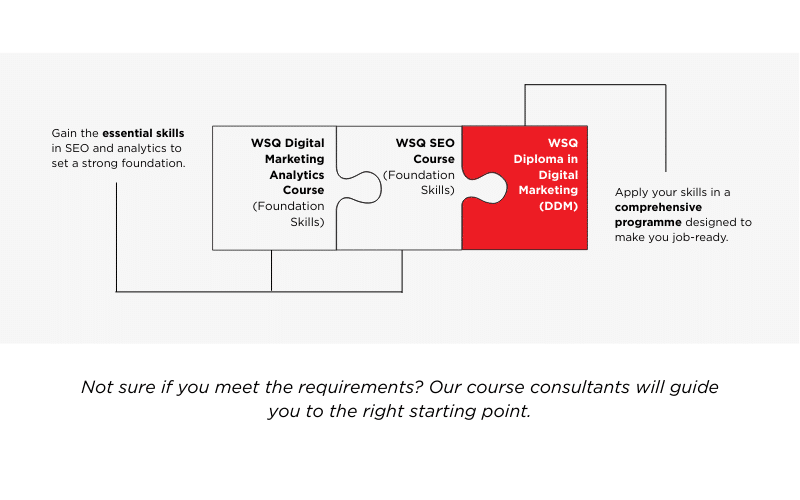
Earn Your WSQ Diploma in Digital Marketing
Are you a Career Seeker, Business Owner, or a Marketer?
CAREER SEEKER

According to Coursera’s The Job Skills of 2024 report, digital marketing skills are among the fastest-growing business skills.
Entry-level digital marketing roles start around SGD 30,000 per year, with experienced positions like Digital Marketing Managers earning SGD 54,000 to SGD 110,000 annually. Sources: Marketing Interactive, Glassdoor
However, breaking into the digital marketing field can be challenging as employers seek candidates with a diverse skill set and comprehensive portfolios.
In this digital marketing diploma programme, you will work on real-world projects, gaining the experience that employers value.
Experienced mentors will guide you through your capstone project with our industry partners, providing first-hand experience working with clients and helping you build a strong portfolio.
BUSINESS OWNER

Understanding digital marketing is crucial for business owners to effectively manage their teams and drive growth.
Navigating the complexities of hiring, managing, and retaining digital marketing talent, along with managing your marketing budget and business ROI, can be particularly challenging.
Completing the 7 digital marketing modules in this Digital Marketing Diploma programme equips you with the skills to execute campaigns independently or manage your team more effectively.
This programme enables you to streamline your operations and empowers you to provide strong leadership and support to your employees, ensuring your business thrives in the digital space.
MARKETER

With the rapid advancement of technology and ongoing digital transformation, the digital skills gap is widening. Emerging platforms, tools, and strategies create a challenging environment for marketing professionals to stay current and effective.
Marketers today must master diverse digital marketing skills while demonstrating a clear return on investment (ROI) for their efforts. This pressure to adapt quickly shows the critical need for continuous learning and professional development in digital marketing.
This comprehensive Diploma in Digital Marketing programme will enhance your skillset and bolster your resume with essential, industry-relevant expertise.
These skills will enable you to significantly improve marketing conversion rates and achieve a higher return on investment, ultimately boosting both your professional profile and your organisation’s success.
Course Modules & Curriculum
Need help? Contact us for more info
Digital Marketing Diploma Course Modules & Curriculum
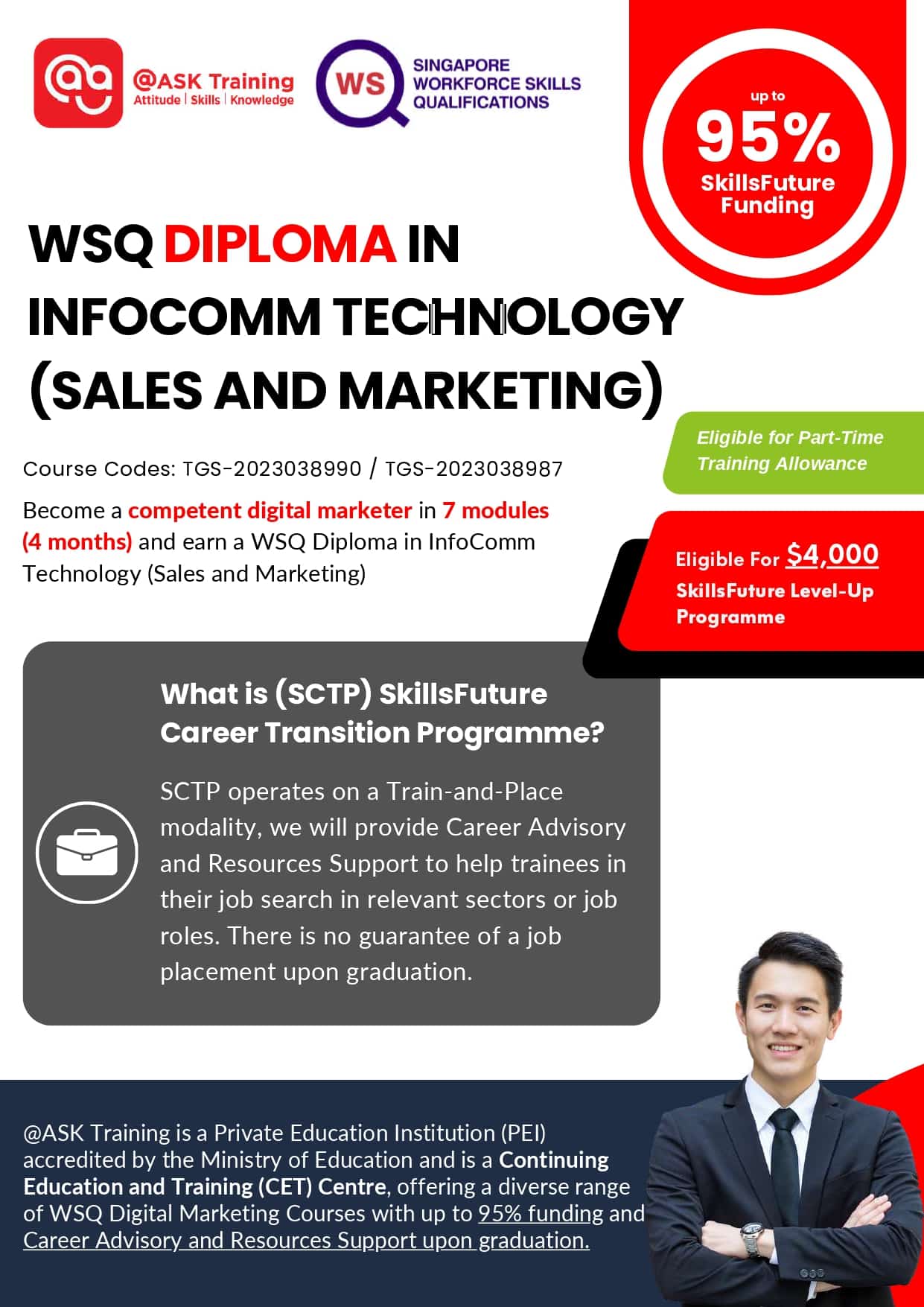
This Diploma in Digital Marketing spans 7 modules (131 hours) over 4 months, depending on whether you’re enrolled in the full-time or part-time intake.
Module 1: WordPress Website Creation
Topics Covered
- Learning Unit 1: WordPress Website Planning and Setup
- Learning Unit 2: Development and Digital Marketing Integration
- Learning Unit 3: Design Documentation – WordPress Website
Hands-on Project-based Assignment
At the end of the module, the trainees should be able to demonstrate proficiency in creating WordPress website design blueprint and customisation, including defining the project’s scope and user needs, selecting and applying design standards and tools, customising a theme, integrating digital marketing functionalities, and producing comprehensive design documentation that outlines the project’s design concept, specifications, and structure, ensuring a cohesive approach to website development and digital marketing strategy.
Learning Outcomes
- Create a WordPress Website design blueprint that meets the business and user requirements.
- Review and recommend appropriate standards, methods and tools for the design of WordPress website, in line with the organisation’s practice and design principles.
- Customise a WordPress theme, including configuring plugins for digital marketing addressing the business and user needs.
- Examine the trade-offs resulting from the integration of different elements into the design and analyse how these trade-offs influence the overall functionality, interoperability, efficiency, and costs of WordPress website creation.
- Plan, document, and communicate the design and functionality effectively, aligning with the project’s goals and audience needs.
Module 2: Digital Content Creation
Topics Covered
- Learning Unit 1: Content Management Strategies & Content Management System
- Learning Unit 2: Digital Content Strategy and Planning
- Learning Unit 3: Content Creation and Optimisation
- Learning Unit 4: Advanced Techniques and Trends
Hands-on Project-based Assignment
At the end of the module, the trainees should be able to develop and execute a digital content strategy that includes analysis, planning, and execution phases. The strategy should focus on content creation, SEO optimisation, and promotion across social media and email marketing to effectively engage a targeted audience.
Learning Outcomes
- Transform an overall content management strategy into policies on web content creation and curation, breaking down the strategy into specific guidelines and rules that govern how content is created, curated, and managed on the web.
- Develop a web content strategy for an organisation, including defining target audiences, setting clear goals, planning content creation, and evaluating content management system options, considering cost, scalability, user-friendliness, and integration capabilities.
- Create and optimise various forms of digital content, including written, multimedia, and interactive content, adhering to best practices for search engine optimisation (SEO), user experience (UX) design, and accessibility to enhance the visibility, engagement, and effectiveness of web content for their target audience.
- Assess emerging tools and techniques, including applying them to enhance user engagement and adapt to evolving user behaviours in their content creation and management efforts.
Module 3: Copywriting & Content Writing
Topics Covered
- Learning Unit 1: Contents – The Foundation to Digital Marketing
- Learning Unit 2: Principles of Digital Storytelling
- Learning Unit 3: Evolving Preference in Contents
- Learning Unit 4: Conceptualising Content Ideas
- Learning Unit 5: Identifying Content Requirements
- Learning Unit 6: The Digital Storyboard Process
- Learning Unit 7: Parameters of Delivering Content
- Learning Unit 8: Features of Marketing Content
- Learning Unit 9: Modes of Content Delivery
- Learning Unit 10: Mapping Digital Storyboard
- Learning Unit 11: Frequency of Delivering Content
- Learning Unit 12: Determine Content Types and Styles
- Learning Unit 13: Modes and Processes for Distributing Contents
- Learning Unit 14: Guidelines for Content Strategy Execution
- Learning Unit 15: Concept of copywriting and content writing in digital marketing
- Learning Unit 16: SEO in Copywriting and Content Writing
- Learning Unit 17: The Role of Content in SEO
- Learning Unit 18: Ethical Considerations and Copywriting Law
Hands-on Project-based Assignment
At the end of the module, the trainees should be able to demonstrate their ability to choose products or campaigns that meet digital marketing goals, craft diverse marketing content for a defined audience, design digital storyboards for strategic planning, set content delivery schedules and formats to boost engagement, select appropriate distribution channels, and create guidelines to ensure brand consistency, content quality, performance tracking, and effective team collaboration.
Learning Outcomes
- Apply the principles of digital storytelling to conceptualise and create content ideas that effectively meet marketing objectives, engaging audiences and driving desired actions in the online landscape.
- Create a digital storyboard as an integral component of a content strategy plan, including applying multichannel content strategies that adhere to the parameters of delivering content for marketing purposes, incorporate the essential features of marketing content, and employ various modes of content delivery to achieve marketing objectives.
Module 4: Google Ads
Topics Covered
- Learning Unit 1: Introduction to Google ads and Strategic Planning
- Learning Unit 2: Google Ads Campaign Setup
- Learning Unit 3: Measuring a Google Ads Campaign
- Learning Unit 4: Testing & Optimisation
Hands-on Project-based Assignment
At the end of the module, the trainees should be able to demonstrate their ability to plan, execute, measure, and optimise a hypothetical Google Ads campaign, including selecting objectives, ad types, targeting, budgeting, creating ads, analysing performance metrics, and conducting experiments to improve the Quality Score.
Learning Outcomes
- Examine the integration of the Google Ads platform within a comprehensive marketing strategy.
- Develop a thorough comprehension of the foundational principles and processes of the Google Ads platform.
- Master the intricacies of Google Ads campaign setup by progressing through each crucial stage to define clear campaign objectives, employ effective bidding strategies, target audiences, conduct strategic keyword research, craft compelling ad copy, explore diverse ad formats, and skillfully manage budgets.
- Develop proficiency in Google Ads by selecting and interpreting relevant metrics to gauge campaign success, including analysing Return on Investment (ROI), reviewing and understanding various attribution models, scrutinising conversion paths, and customising reports to evaluate advertising performance comprehensively.
- Evaluate a Google ads campaign to ensure the activity effectively reaches target markets, aligns with performance measures, and is optimised based on testing, ad relevance, and targeting.
Module 5: Facebook & Instagram Marketing
Topics Covered
- Learning Unit 1: Meta (Facebook and Instagram) Marketing
- Learning Unit 2: Meta Marketing Plan and Ads Campaign
- Learning Unit 3: Launch and Evaluate Meta Ads Campaign
- Learning Unit 4: Crisis Communication Plan
Hands-on Project-based Assignment
At the end of the module, the trainees should be able to demonstrate their ability to plan, create, launch, and evaluate a Meta ad campaign, encompassing setting objectives and target audience, developing and uploading ad creatives, initiating the campaign, and measuring its success through key performance indicators to make data-driven optimisations.
Learning Outcomes
- Utilise media platforms for marketing and media management while aligning platform selection with audience, content, goals, and resources to enhance social media strategy effectiveness.
- Create a comprehensive marketing plan that involves developing and facilitating the content and integration of media platforms for Meta, including defining the activities, timeline targets, and responsibilities.
- Demonstrate proficiency in refining the advertising strategy, optimising ad creatives, and making data-driven decisions for improved campaign results and return on investment.
- Develop crisis communication skills to effectively manage and resolve conflicts and complaints in Meta Ads campaigns.
Module 6: Website and Landing Page Conversion Optimisation
Topics Covered
- Learning Unit 1: Introduction to Conversion Optimisation
- Learning Unit 2: Consumer Psychology and the User Experience
- Learning Unit 3: Fundamentals of Design (UX/UI)
- Learning Unit 4: Effective Content & Messaging
- Learning Unit 5: Optimisation Tools
- Learning Unit 6: Measurement and Reporting
Hands-on Project-based Assignment
At the end of the module, the trainees should be able to demonstrate their ability to optimise website and landing page conversions through assessment, design improvements, content enhancement, technical optimisation, and performance monitoring across five stages, involving SWOT analysis, wireframing, content strategy development, A/B testing, SEO adjustments, and tracking key performance indicators in Google Analytics for ongoing refinement and performance improvement.
Learning Outcomes
- Gain an understanding of the role that websites and landing pages play in the overall marketing mix, including the use of the conversion optimisation framework to gain a deeper analysis and then building out goals for improvement of website and landing page conversion rates.
- Acquire a deep understanding of the user journey and the critical skills for effective website flow analysis.
- Apply the significance of Heuristic analysis for evaluating interfaces highlighting common usage patterns and identifying areas for optimisation.
- Evaluate and reengineer a website or landing page layout, including improving its navigation, visual hierarchy, and mobile responsiveness to enhance user engagement and facilitate a smoother journey towards conversion goals.
- Craft compelling, targeted content strategies that effectively communicate the value proposition, incorporate persuasive copywriting techniques, and integrate social proof to increase the credibility and conversion potential of a website or landing page.
- Integrate ethical psychological triggers and ensure adherence to relevant privacy regulations within digital content, including creating a sense of urgency and trust that complies with legal standards to motivate user action and increase conversion rates effectively.
- Develop and implement a data-driven conversion rate optimisation strategy by utilising A/B testing, SEO best practices, and key performance indicators to systematically enhance website functionality and user experience and ultimately improve conversion rates.
- Assess and select relevant key performance indicators to measure the impact of optimisation techniques to ascertain if the goals have been reached.
- Set up reports to consistently track these metrics and understand how to use this data and develop marketing insights to improve website and landing age performance.
Module 7: Capstone Project (Digital Marketing Campaign)
Overview
The Capstone Project involves crafting a comprehensive Digital Marketing Campaign portfolio for a partner enterprise, detailing a conversion-optimised landing page design, engaging content for both web and social platforms, targeted ad copy for search and display, and meticulously set up Google Ads and social media campaigns.
This includes conducting a SWOT analysis of competitor pages, creating compelling digital content, and evaluating the overall campaign effectiveness using conversion optimisation models, with a focus on aligning the campaign’s purpose, objectives, and execution with the partner enterprise’s specific requirements and goals.
Learning Units
- Scope Digital Marketing Campaign
- Purpose of digital marketing communications campaign plan
- How to set digital marketing campaign objectives, goals, and KPIs
- Examples of various types of digital marketing objectives and SMART goals
- Overview of entire digital marketing campaign plan template
- Create Landing Page
- How to conduct SWOT analysis across competitor websites and landing pages?
- Digital Marketing Analytics Tools and Techniques
- Content Creation for Web & Social
- Examples of various types and formats of engaging content for web and social
- Tutorial and walkthrough of content creation using design tools like Canva.
- Copywriting & Content Writing
- Best practises for Search Ads (Google Search & Display Ads)
- Best practises for Display Ads (Google Display Ads)
- Tutorial and walkthrough of how to produce an SEO-optimised blog article or lead magnet with the assistance of AI tools.
- How to avoid AI tool usage detection?
- Google Ads
- Budget setting
- Scheduling ad campaigns
- Tutorial and walkthrough of setting up a Google Ads Search and Display campaign.
- Facebook & Instagram Marketing
- Budget setting
- Scheduling ad campaigns
- Tutorial and walkthrough of setting up a Facebook and Instagram marketing campaign.
- Website & Landing Page Conversion Optimisation
- Best practises & Heuristic principles of Conversion Rate Optimisation
Learning Outcomes
Upon completion of this course, trainees should be able to develop and execute a digital marketing campaign, including:
- Scope the purpose and objectives of a digital marketing campaign in accordance with a company’s requirements.
- Conduct SWOT analysis on competitor landing pages and create a conversion-focused landing page that stands out from the competition.
- Create highly engaging content for web and social.
- Write an ad copy for search, display, and/or social.
- Produce an SEO-optimised blog article or lead magnet for content marketing.
- Set up a Google Ads Search and Display campaign to market a company’s products and services.
- Set up social media marketing campaigns to drive awareness and conversions for a company’s products and services.
Enrolment Requirements
To apply for the WSQ Diploma in Infocomm Technology (Sales and Marketing) Programme, you should possess one of the following qualifications or meet one of these criteria:
- Nitec Graduate between the age of 21 to 30
Basic computer literacy and an advanced understanding of sales and marketing concepts are required.
All Applicants will go through pre-enrolment screening process.
Application Documents Required:
- Latest resume
- Highest qualification certificate and/or academic transcript
These documents will be reviewed as part of the screening process.
Why Take @ASK Training’s Diploma Programme
When you learn with us, you will get certified by a recognised certification body, the Singapore Workforce Skills Qualifications (WSQ). On top of that, you will also acquire extensive knowledge from highly experienced industry practitioners in Singapore who develop and deliver top quality course content through experiential hands-on learning methodologies. What you can expect:
Industry-recognised WSQ Statement of Attainments
Real-world hands-on projects
Comprehensive, up-to-date curriculum and courseware
Post-course coaching and mentorship
Career advisory and resources support
Hear from our Diploma Programme Alumni
"Trainers here are knowledgeable and patient"
Xie Jing Hui, Sole Proprietor, Amazon Products
"I'm a content creator myself, I want to upskill and [be able to] adapt to the changes."
Jannah, Content Creator
"Trainer is very engaging and shares his past experiences and case studies"
Muhammad Aizudyn, Associate Engineer, ST Engineering
Post-Course Support and Outcomes
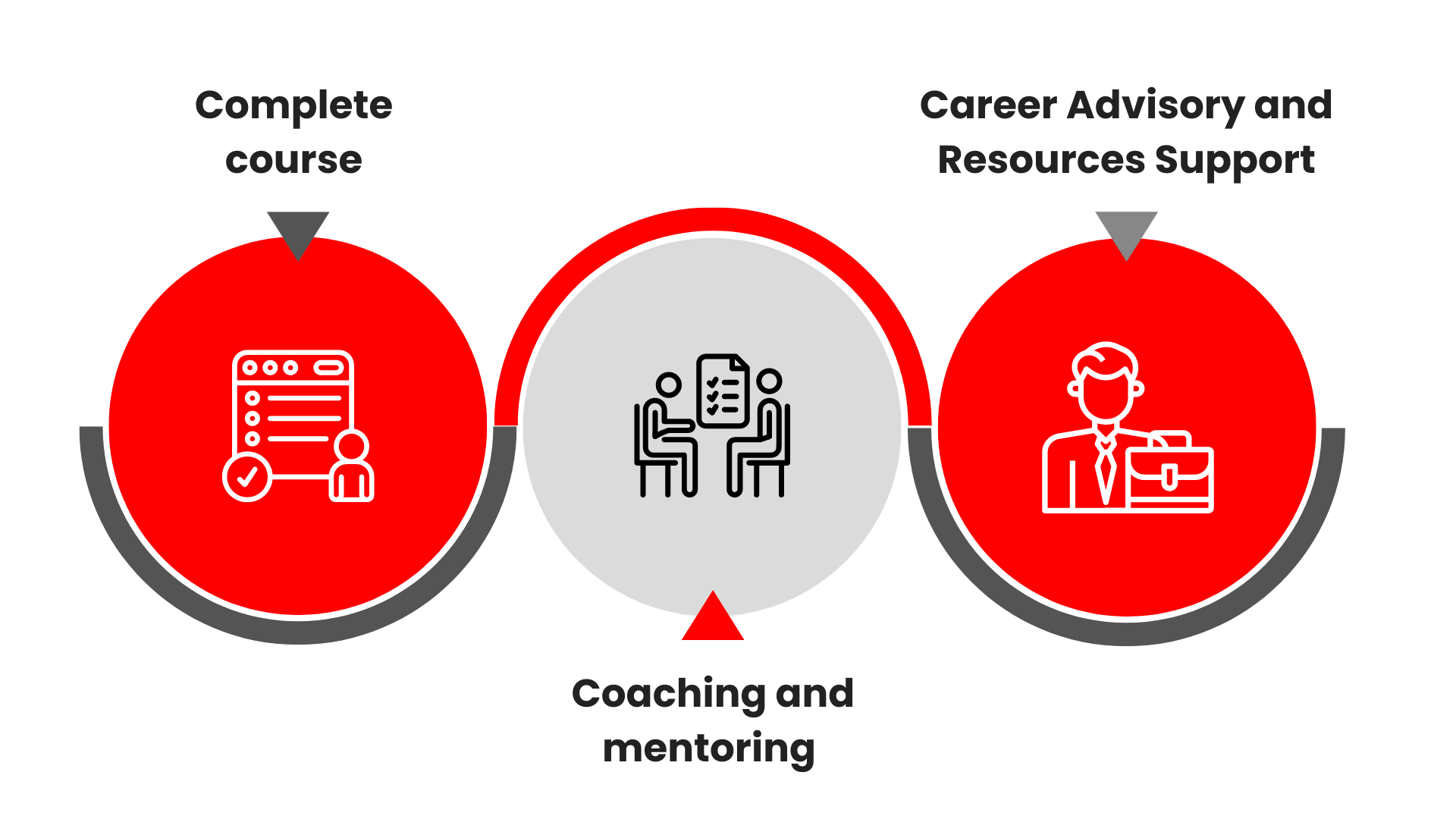
Upon completing this digital marketing diploma programme, you will receive coaching and mentorship by our programme advisors to complete your capstone project. This capstone project also serves as your portfolio, showcasing your knowledge and skills.
Once the project is completed, you’ll gain access to our dedicated career advisory and resources support. Our career services team will be readily available to provide assistance to enhance your employability, such as Career Assistance Workshops, resume building and interview tips, and more.
Diploma in Digital Marketing Course Fees and Subsidies
Self-Sponsored
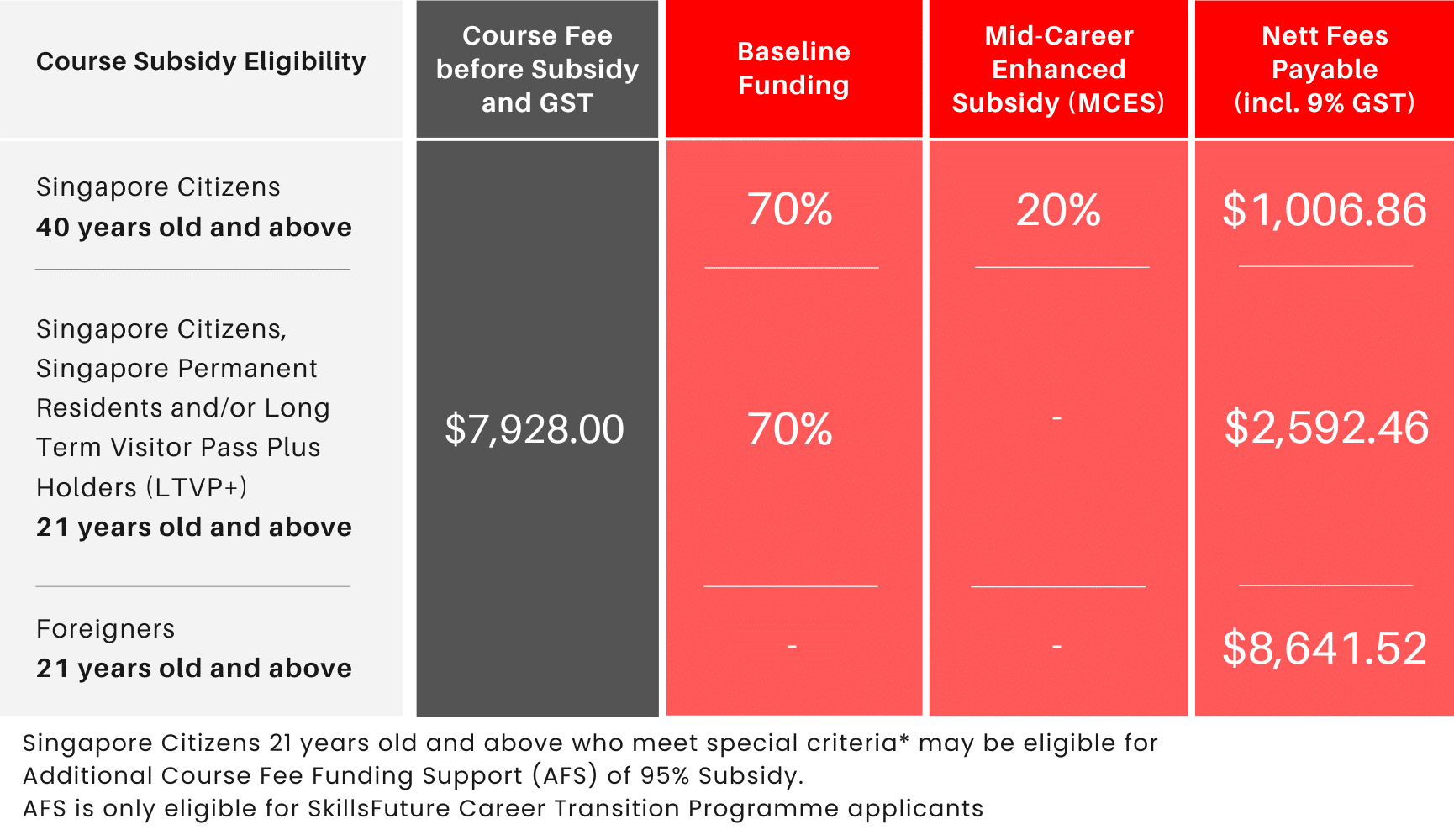
Criteria and/or Requirements for Course Subsidies
Baseline Funding Criteria and/or Requirements
Trainee is 21 years old and above, and a
- Singaporean Citizen; or
- Permanent Resident; or
- Long Term Visitor Pass Plus (LTVP+) Holder
Will be eligible for 70% SkillsFuture Funding.
Nett course fee payable (including 9% GST): S$2,592.46
Course fees can be further offset by SkillsFuture Credit for Singapore Citizens aged 25 and above. Singapore Citizens aged 21 to 31 may also offset fees with the Post Secondary Education Account Funds.
NOTE: Trainees are entitled to the SSG training grant when they meet 75% of the training attendance and pass the requisite assessment. If trainees fail the assessment, they are required to re-take it immediately without additional fee. For more details see Course Funding Information.
Important Reminder: Your PSEA claim needs to be submitted at least 1 month before the course’s commencement date. Should you miss this deadline, an alternative payment method must be used to secure your spot in the course. After the disbursement of your PSEA funds to us, we will reach out to initiate the refund process.
Digital Marketing Diploma Course Schedules
Course not found: "WSQ Diploma in InfoComm Technology (Sales & Marketing)"
Available courses (use index for easier filtering):
- #1: Diploma in Infocomm Technology - Infrastructure and Operations
[ask_automation_fq index="1"] - #2: Diploma in Generative AI
[ask_automation_fq index="2"] - #3: Diploma in Generative AI - Weekend
[ask_automation_fq index="3"] - #4: Advanced Certificate in IT Infrastructure and Operations (Full-Time) (TA-eligible)
[ask_automation_fq index="4"] - #5: Diploma in Digital Marketing (Full-Time) (TA-eligible)
[ask_automation_fq index="5"]
Tip: Use index="1" instead of course name!
Frequently Asked Questions (FAQ)
General Questions
Why do ITE graduates need to enrol in a diploma by age 30 for the ITE Progression Award (IPA)? What about those who want to upskill later?
ITE graduates need not upgrade immediately after graduating. They will be eligible for the award even if they work first, before pursuing a diploma by age 30.
ITE graduates who wish to upskill later can tap on other upskilling support initiatives. These include the SkillsFuture Credit to help offset the cost of upskilling and reskilling, and subsidies for MOE/SSG-supported programmes.
Why is the ITE Progression Award (IPA) restricted to diplomas issued by MOE-funded institutions and WSQ diplomas?
We started with publicly-funded diplomas issued by MOE-funded institutions, which are held to high quality standards. From 1 June 2025, we will extend the IPA to WSQ diplomas as these are publicly funded diploma qualifications that are aligned to the Skills Framework, subject to quality assurance by SkillsFuture Singapore, and developed to allow individuals to acquire the skills and credentials that would enable them to access good jobs.
What are the criteria for ITE graduates to progress to diplomas issued by MOE-funded institutions or WSQ diplomas?
ITE graduates must meet the relevant minimum entry requirements to qualify for the IPA-eligible diplomas.
Please refer to the links below for more information on the respective diplomas.
ITE
Polytechnic
- Polytechnic Full-Time Diplomas
- Polytechnic Part-Time Diplomas
NAFA
LASALLE
NIEC
WSQ
Can eligible ITE graduates receive the ITE Progression Award (IPA) multiple times if they complete more than one diploma before the age of 30? What about those who completed a diploma before 2024 and would like to pursue a second diploma?
When will the students receive the PSEA and CPF-OA top-ups for the ITE Progression Award (IPA)?
The CPF-OA top-up will be disbursed by April each year, to those who completed their diploma by September in the preceding year.
How do I know if I have received my PSEA and/or CPF-OA top-up under the ITE Progression Award?
You will be notified of the PSEA top-up through SMS notification. You can also call the 24-hour automated PSEA hotline at 6260 0777 to check your account balance and last top-up from the government.
You will be notified of the CPF-OA top-up through email. You can also login to my cpf digital services or CPF Mobile app via Singpass to view your account balance.
What other support is available for students who require additional financial assistance and not eligible for ITE Progression Award (IPA)?
On top of government-funded bursaries, IHLs and AIs also provide their own financial assistance to help students in need of further assistance to further reduce their out-of-pocket expenses.
Speak to A Programme Consultant
"*" indicates required fields