
Organisations everywhere are experiencing cycles of transformation—new technologies, new structures, and new expectations—creating fresh pressures for you at every level.
As a result, many professionals are finding it harder to maintain focus, motivation, and emotional balance amid these shifting demands.
According to Singapore’s Ministry of Manpower (MOM) iWorkHealth assessment data (2024), about one in three workers reported facing work-related stress or burnout, linked to workload and other pressures.
This is why workplace resilience training has become essential for building resilience at work and fostering adaptability and well-being for individuals and teams.
Resilience isn’t about pushing through exhaustion or pretending challenges don’t affect you. It’s the capacity to stay flexible, grounded, and able to recover, even when circumstances feel unpredictable or overwhelming for you.
With the right mindset and practical tools, you can build emotional resilience and respond more effectively to stress and change.
In this article, you’ll gain a research-based understanding of how resilience works, along with actionable habits that enhance adaptability, well-being, and psychological safety in today’s evolving workplace landscape.
Understanding Resilience — The Science of Bouncing Forward
Resilience, as defined by the American Psychological Association (APA), is the process of adapting well in the face of adversity, trauma, or significant stress.
It’s not about avoiding stress; it’s about building emotional resilience so you can navigate challenges with clarity and stability.
One of the most widely referenced analyses of resilience in professional settings comes from Diane Coutu, in her influential Harvard Business Review article “How Resilience Works” (2002).
Drawing from a range of psychology, leadership, and sociology research, she identified three traits commonly found in resilient people:
- Acceptance of reality — the ability to face challenges honestly rather than ignore or minimise them.
- A deep sense of meaning — an internal guiding belief or compass that guides decisions during uncertainty.
- Ability to improvise — using creativity and flexibility to solve problems when circumstances change.
These traits are foundational for building resilience at work, helping employees stay grounded under pressure, adapt to new demands, and respond to obstacles with a clearer mind.
“Resilience isn’t the absence of hardship — it’s the presence of perspective.”
This perspective captures the heart of modern resilience: it’s not about avoiding stress but developing the mindset and habits that allow you to continue moving forward even when conditions are uncertain.
The Inner Framework — What Keeps Us Steady When Things Shake
Two psychological models help explain how resilience functions beneath the surface and why some people remain steady while others feel overwhelmed.
The PERMA Model (Seligman, 2011)
This widely used wellbeing framework from Dr. Martin Seligman outlines five elements that support emotional resilience and sustained wellbeing. When strengthened, they enhance your emotional balance, focus, and adaptability in the workplace.
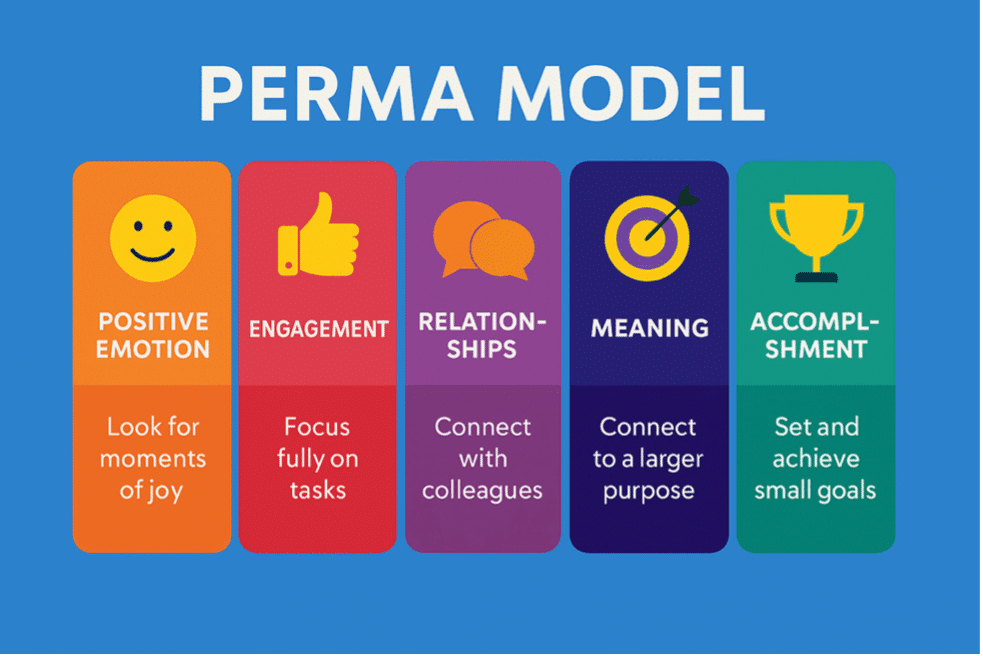
Positive Emotion
- Cultivating moments of gratitude or brief mood resets during the day.
- Example: Taking 60 seconds to acknowledge something that went well before moving to the next task.
Engagement
- Being fully absorbed in meaningful or challenging tasks.
- Example: Setting aside uninterrupted time to work on a project that plays to your strengths.
Relationships
- Developing supportive, trusting connections that buffer stress.
- Example: Checking in with a colleague after a tough meeting to maintain rapport and mutual support.
Meaning
- Understanding how your work contributes to something larger.
- Example: Linking your daily responsibilities to the organisation’s mission or the impact on customers.
Accomplishment
- Moving toward goals and recognising progress.
- Example: Breaking a complex assignment into micro-goals so you can track small wins throughout the week.
This model supports both emotional resilience and adaptability and wellbeing by helping us stay grounded, connected, and purposeful, even when pressure dies.
Cognitive Appraisal Theory (Lazarus & Folkman, 1984)
Developed by psychologists Richard Lazarus and Susan Folkman, Cognitive Appraisal Theory explains that stress is shaped not by events alone, but by how we interpret them.
A challenge may feel like a threat or an opportunity depending on the story we tell ourselves. This model highlights why resilient individuals can remain steady; they practice reframing, perspective-taking, and intentional evaluation rather than reacting automatically.
Combined, both models show that resilience is built through intentional practices: reframing challenges, nurturing relationships, and staying anchored in purpose.
Example: Instead of treating a setback as a failure, you might view it as an experiment, valuable information that guides your next move.
Building Resilience from Within — Habits That Rebuild Energy and Perspective
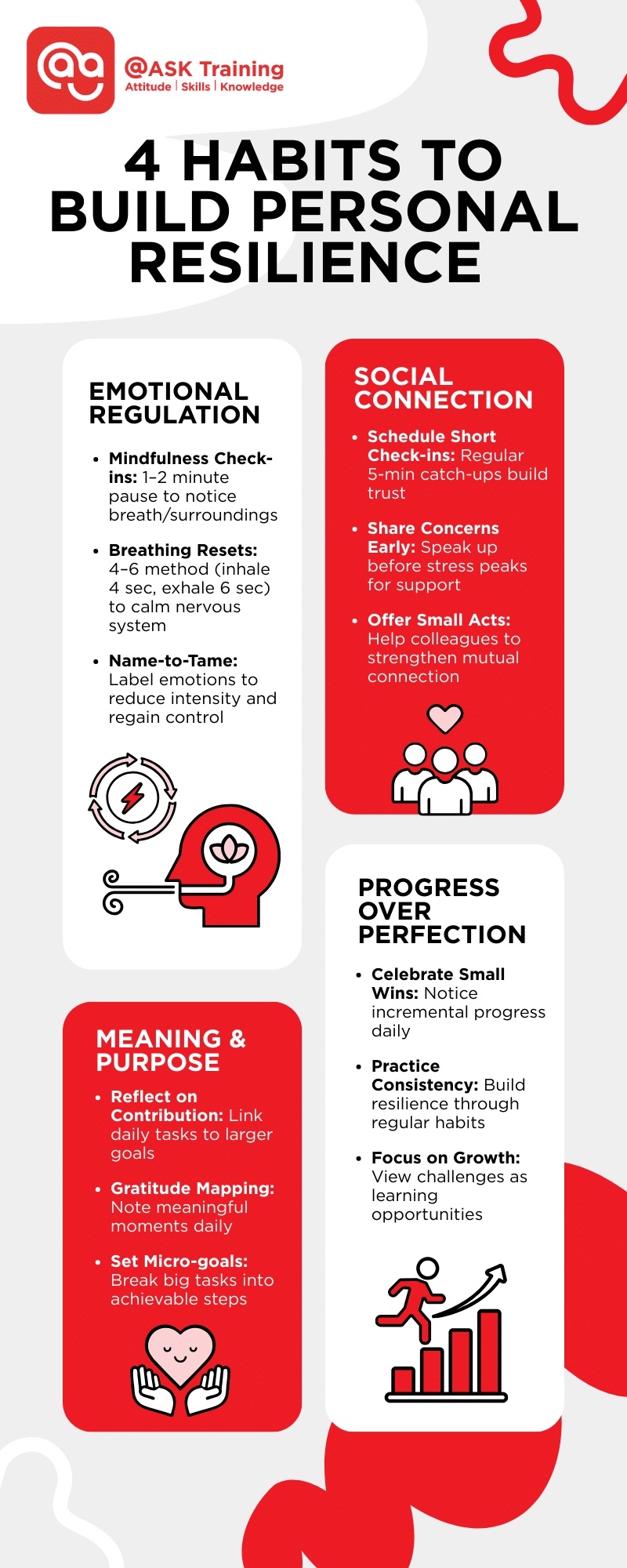
Let’s explore four research-backed habits for building personal resilience, focusing on emotional regulation, social connection, meaning, and progress.
Resilience grows through daily habits that strengthen emotional balance, perspective, and adaptability.
1. Emotional Regulation
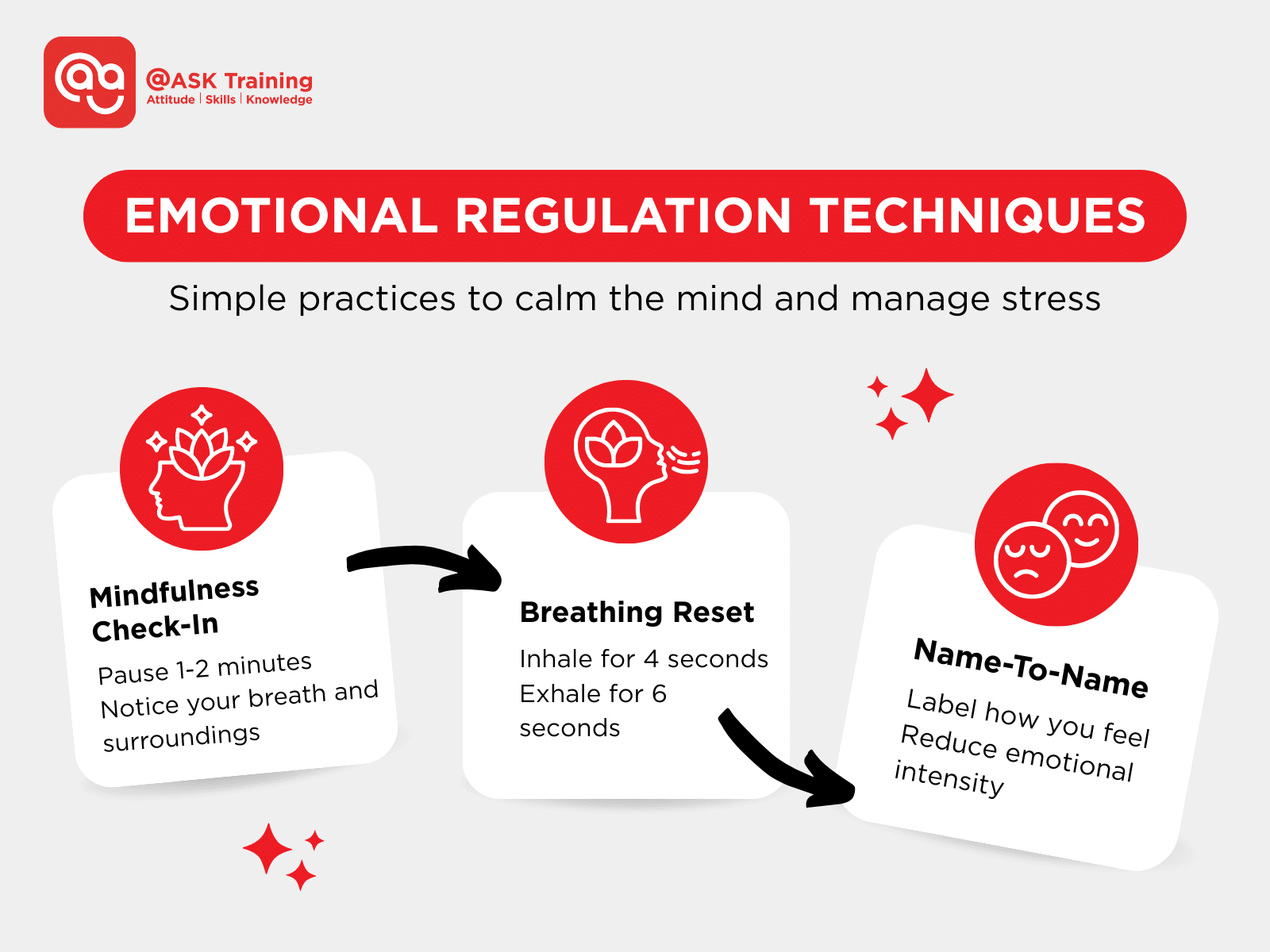
Psychologist James Gross (2015) highlights that managing emotional responses—rather than suppressing them—is the foundation of resilience. These micro-practices help you restore clarity when stress begins to build.
-
Mindfulness check-ins – A brief 1–2 minute pause to notice your breath or surroundings can interrupt spiralling thoughts.
Example: Taking a quiet moment before a meeting to reset your attention. -
Breathing resets – Techniques like the 4–6 method (inhale for four seconds, exhale for six) quickly calm the nervous system and reduce tension.
Example: Using this method before responding to a challenging email or starting a difficult conversation. -
Name-to-tame – Identifying your emotion (“I’m feeling overwhelmed”) reduces intensity and helps you regain control.
Example: Quietly naming what you feel before choosing your next step.
Together, these techniques train your body and mind to respond—not react—to stress.
2. Social Connection
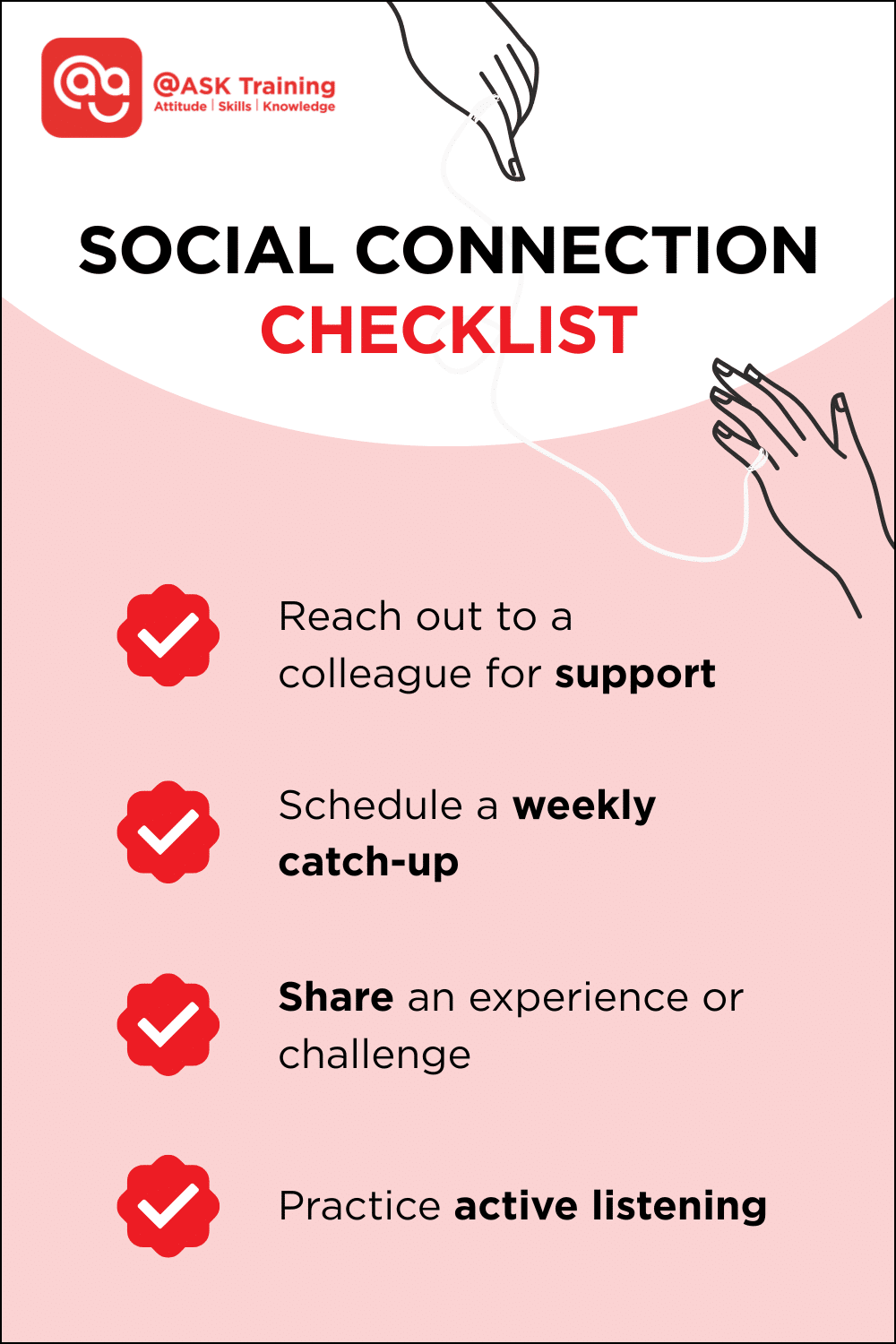
Research by psychiatrists Steven Southwick and Dennis Charney (2012) shows that strong social connections moderate stress and significantly support resilience. Instead of withdrawing, resilient people reach out and build supportive relationships.
-
Schedule short check-ins – Maintaining small but regular interactions builds trust.
Example: A five-minute catch-up with a colleague after a hectic morning. -
Share concerns early – Speaking up before stress peaks opens room for dialogue and support.
Example: Telling your manager, “I may need help prioritising this,” instead of coping alone. -
Offer small acts of support – Helping colleagues strengthens connection and can reduce your own stress.
Example: Offering to review a teammate’s presentation or sharing helpful resources.
Connection acts as a stabiliser—reducing emotional load and helping you navigate challenges with more confidence.
3. Meaning and Purpose
Purpose anchors resilience. When you link daily tasks to a broader sense of contribution, you experience greater motivation, clarity, and emotional steadiness.
-
Reflect on contribution –
Example: Noting how your work supports customers or improves processes enhances meaning. -
Use gratitude mapping –
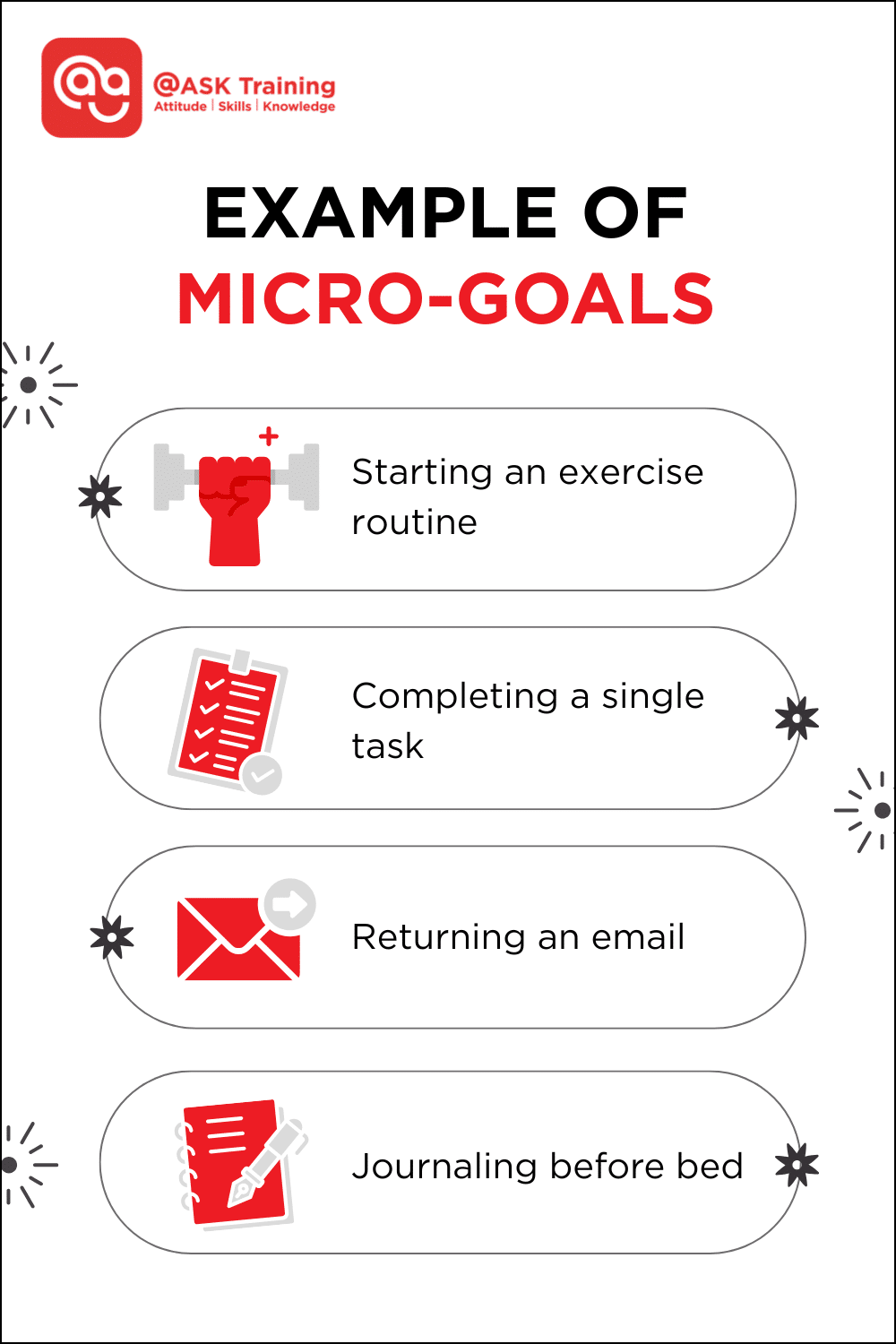
Example: Writing down one meaningful moment or interaction encourages perspective. - Set micro-goals – Breaking large goals into smaller steps builds momentum and restores control.
Example (work): Instead of aiming to “finish the full report,” set a micro-goal like “complete the introduction by 11 am.”
Example (wellbeing): Instead of committing to a full exercise regime, start with a 10-minute walk or a short stretching session to build consistency.
Micro-goals shift the focus from pressure to progress, making resilience more attainable through small, repeatable wins.
4. Progress Over Perfection
Resilience grows through consistent, daily practice. Small wins, moments of steadiness, and honest reflection compound over time.
When you notice incremental progress rather than striving for perfection, you build the inner capacity to adapt, recover, and keep moving forward—even when the path is uncertain.
Resilience in Action: Learning from Challenges Without Breaking
Real resilience shows up during difficult moments. Instead of shutting down or reacting impulsively, resilient individuals review, reflect, and re-engage with greater clarity.
Use these reflective prompts to develop awareness:
- “What situation recently tested my patience or confidence?”
- “What helped me recover my footing?”
- “What would I do differently next time with what I know now?”
This approach aligns with Growth Mindset research (Dweck, 2006), which emphasises that setbacks carry information—not identity. When seen this way, challenges become catalysts for growth rather than threats to self-worth.
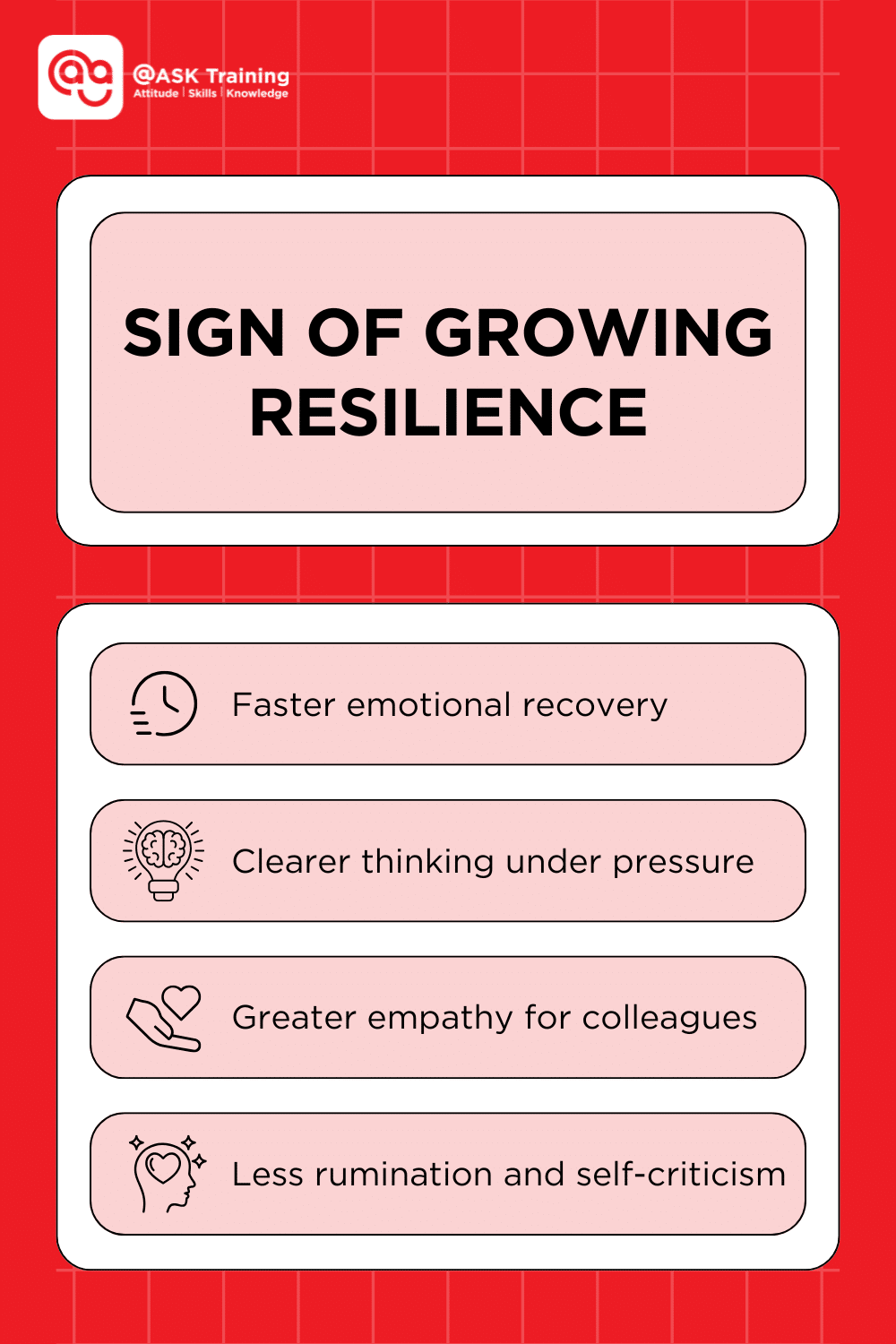
Look for signs you’re becoming more resilient:
- Faster emotional recovery
- Clearer thinking under pressure
- Greater empathy for colleagues
- Less rumination and self-criticism
These are the markers of emotional maturity and workplace resilience training taking effect.
Leading Yourself and Others Through Uncertainty
Resilience doesn’t stop at the individual level—it shapes how leaders influence the emotional climate of their teams. In times of rapid change, people naturally look to their leaders for signals of safety, stability, and direction.
Psychological Safety
Harvard Business School professor Amy Edmondson, who introduced the concept of psychological safety, found that teams are far more resilient when members feel safe to ask questions, admit mistakes, express concerns, and respond to challenges with creativity rather than fear.
Leadership Resilience
Daniel Goleman, the psychologist known for popularising Emotional Intelligence (EQ), emphasises that leaders set the emotional tone. When leaders model calmness, transparency, and emotional self-regulation, they help teams stay centred even in high-pressure situations.
Examples of resilient leadership behaviour include:
-
Communicating transparently –
Example: Sharing what is known, what is uncertain, and what steps are being taken. -
Staying calm during uncertainty –
Example: Remaining calm during restructuring updates instead of showing panic or frustration. -
Encouraging open dialogue –
Example: Inviting team members to raise concerns early and validating their experiences. -
Admitting limitations –
Example: Saying, “I don’t have the full answer yet, but here’s what we know so far,” to build trust and clarity.
Leaders who show vulnerability and composure create a stabilising ripple effect—making resilience a shared, contagious strength.
Wrapping Up
Resilience isn’t an innate personality trait reserved for a few—it’s a skill that grows through consistent practice.
By understanding the science behind it and adopting habits that cultivate mindset shifts, meaning, and connection, anyone can strengthen their ability to thrive through uncertainty.
The real essence of workplace resilience training lies in fostering adaptability, emotional balance, and psychological safety—individually and collectively.
“The true test of resilience isn’t how fast you recover, but how fully you stay engaged while the world keeps changing.”
Ready to Strengthen Your Resilience?
@ASK Training offers practical resilience training in Singapore designed for individuals and organisations. Build the skills to stay grounded, adaptable, and engaged, no matter what comes your way.
Personal Development courses worth exploring:
-
Building Personal Resilience and Well-Being
— A 1-day workshop designed to strengthen emotional balance, mental flexibility, and everyday coping skills. -
Resilience at Work: Turning Stressful Situations Into Your Advantage
— A 2-day course that helps employees build stronger workplace resilience and respond more effectively to stress.
For teams and organisations:
@ASK Training also offers tailored corporate resilience programmes designed to equip leaders and teams with the tools to thrive through change.
Empower yourself and your team. Speak to a learning consultant today and unlock tailored strategies to strengthen resilience and wellbeing.
Related Courses
- Mastering Emotional Intelligence: Your Key to People Management Excellence!
- People Centered Leadership- Motivating, Inspiring and Engaging Others
- Empathy: Harnessing The Power of Connection at Workplace
◆◆◆
Related Articles
Article Topics
- Understanding Resilience — The Science of Bouncing Forward
- The Inner Framework — What Keeps Us Steady When Things Shake
- Building Resilience from Within — Habits That Rebuild Energy and Perspective
- Resilience in Action: Learning from Challenges Without Breaking
- Leading Yourself and Others Through Uncertainty
- Wrapping Up
- Ready to Strengthen Your Resilience?