
In today’s fast-paced business environment, especially in a competitive hub like Singapore, having a group of talented individuals isn’t enough. But what if your greatest asset is not being fully utilised?
Gallup data reveals that only 16% of the Singaporean workforce is fully engaged at work. This startling engagement gap represents a massive opportunity, and the key to unlocking it lies in the deliberate cultivation of team cohesion.
Team cohesion is the invisible glue that turns a collection of employees into a synergistic force, driving your organisation toward its goals with remarkable efficiency.
But what exactly is team cohesion, and why is team cohesion important enough to be a top priority for HR professionals and business leaders?
In this article, we’ll define team cohesion, explore its undeniable business benefits, and provide you with actionable strategies to cultivate a cohesive work environment that thrives.
Let’s begin by breaking down exactly what we mean by ‘team cohesion’.
What Is Team Cohesion?
At its core, team cohesion is the strength of the bonds linking members of a group. It’s the shared commitment and sense of belonging that motivates individuals to work together harmoniously towards a common objective.
Think of it not just as teamwork, but as team togetherness.
Example:
A cohesive team isn’t just a department that meets its project deadline. It’s a team where members proactively cover for a sick colleague, openly debate ideas without fear of judgment, and collectively celebrate successes and learn from failures.
This creates a cohesive team environment where collaboration is the default, not a forced directive.
Understanding what team cohesion is, is the first step to unlocking its potential.
Now that we have a clear definition, let’s explore the compelling reasons to make it a priority.
Why is Team Cohesion Important at Work?
The benefits of fostering cohesion in the workplace extend far beyond a pleasant office atmosphere. It directly impacts your bottom line.
Recent research by Simon and Simon (2025) reveals the significant cost of poor teamwork to businesses.
Their findings show that communication and collaboration breakdowns are causing real damage to workplace performance:
- 86% of employees blame workplace failures on poor communication
- 40% of teams struggle with a lack of collaboration
- 28% of missed deadlines are caused by communication breakdowns
These numbers make it clear: the way teams communicate, and work together directly impacts your bottom line.
Here’s how a cohesive team environment drives tangible business success:
Boosts Efficiency and Problem-Solving
- Cohesive teams communicate openly and trust one another’s expertise.
- This reduces duplicated efforts and misunderstandings, allowing them to solve complex problems more creatively and efficiently.
Elevates Employee Morale and Engagement
- Employee morale in cohesive teams is significantly higher.
- When people feel connected to their colleagues and valued for their contributions, they are more engaged, motivated, and less likely to leave.
Enhances Customer Service
- A team that works well together internally projects a unified, positive front to customers.
- This seamless collaboration leads to faster response times and more comprehensive service, directly improving the customer experience.
Drives Revenue and Growth
- All these factors combine to create a more productive, innovative, and reliable organisation.
- This operational excellence naturally leads to better business outcomes, increased customer loyalty, and sustainable growth.
The evidence is clear: investing in team cohesion in the workplace is not a soft skill; it’s a strategic imperative.
But what does this high-level cohesion look like in practice on a daily basis?
Key Characteristics of a Cohesive Team
How can you spot a truly cohesive team? They often share these distinct characteristics:
- Deep-Rooted Trust and Psychological Safety: Members feel safe to take risks and be vulnerable in front of each other without fear of reprisal.
- Open and Honest Communication: Feedback is given constructively, and conflicts are addressed directly and respectfully, seen as opportunities for growth.
- Alignment on Shared Goals: Everyone understands and is committed to the team’s primary objectives, ensuring all energy is focused in the same direction.
- A Culture of Mutual Support: Team members willingly help one another, understanding that the team’s success is their own success.
Recognising these traits is key to diagnosing the current state of your own teams.
To build these characteristics effectively, it helps to understand the different forms cohesion can take.
The Two Pillars: Task and Social Cohesion
To build team cohesion effectively, it’s helpful to understand its two primary types:
- Task Cohesion: This is the shared commitment to achieving a specific goal or completing a project. It’s the driving force behind a sales team striving to hit its quarterly target.
- Social Cohesion: This refers to the interpersonal bonds and friendships among team members. It’s the team that enjoys having lunch together or celebrating birthdays.
While both are important, the most successful teams often strike a balance. A team with strong task cohesion but no social connection can feel transactional, while a team with only social cohesion may struggle with accountability.
Broader views also include emotional and structural cohesion, which relate to shared values and well-defined roles.
Understanding these dimensions allows for more targeted, cohesive team-building efforts.
So, how can you actively cultivate both task and social cohesion within your teams?
How to Improve Team Cohesion in the Workplace
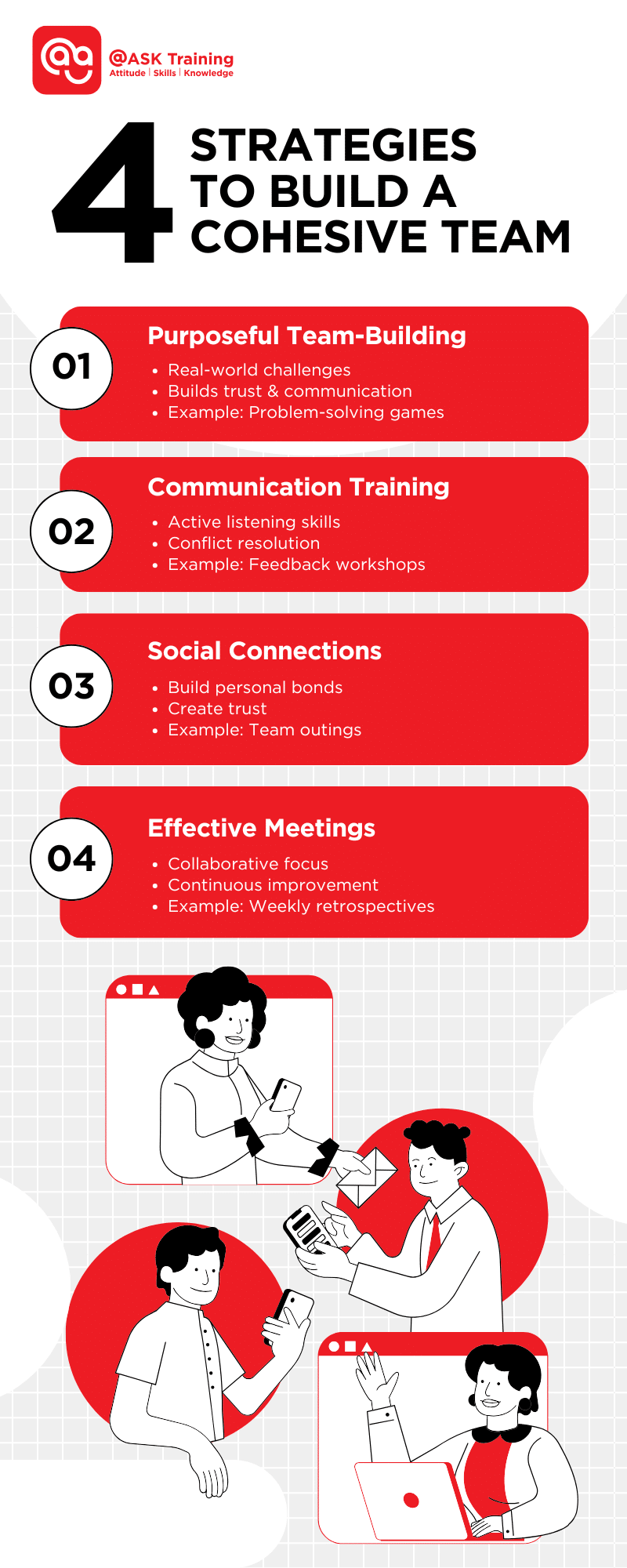
Building a cohesive work environment requires intentional effort. Here are four practical strategies you can implement:
1. Facilitate Purposeful Team-Building
Generic, forced-fun activities can feel like a chore. The goal is to use exercises that mirror real workplace challenges.
- Why it works: Activities like obstacle courses or problem-solving scavenger hunts require cohesive teamwork, communication, and trust to succeed, directly translating lessons back to the office.
- Example: Instead of a simple trust fall, use a “blindfolded guide” activity where one team member must verbally guide another through a complex set of tasks, simulating clear instruction and active listening.
2. Invest in Communication Training
Most team conflicts stem from poor communication. You cannot assume employees inherently know how to navigate difficult conversations.
- Why it works: Formal training in active listening, giving/receiving feedback, and conflict resolution provides a common language and a safe framework for interaction, laying the groundwork for all other collaboration.
- Example: A workshop on “Non-Violent Communication” can teach teams to express needs without blame, reducing defensiveness and fostering understanding.
3. Organise Group Outings and Social Events
Strong working relationships are often built on personal connections formed outside the pressure of deadlines.
- Why it works: Casual social events, volunteer days, or team dinners build the relational trust and camaraderie that fuels task cohesion. It reminds everyone that they are people first, colleagues second.
- Example: A monthly “coffee lottery” where random team members are paired for a virtual or in-person coffee chat can break down silos and build unexpected connections.
4. Hold Regular, Productive Team Meetings
Meetings are often seen as time-wasters because they lack structure and purpose beyond status updates.
- Why it works: When run effectively, meetings become a hub for collaboration, transparency, and alignment. They ensure everyone understands the “why” behind their work and can contribute ideas freely.
- Example: Implement a weekly “retrospective” where the team discusses what went well, what didn’t, and how processes can be improved, creating a culture of continuous collective improvement.
Here’s a quick recap:
These actionable steps can set you on the path to fostering a more unified team.
However, none of these initiatives can reach their full potential without the active and skilled involvement of your leaders.
The Indispensable Role of Leaders in Fostering Cohesion
Leaders are the architects of your team’s culture. While strategies and activities provide the framework for team cohesion, it’s leadership that brings them to life.
Here’s how effective leaders actively build a cohesive work environment:
1. Model Collaborative Behaviour
- Action: Demonstrate the teamwork you expect to see.
- Impact: When leaders actively collaborate across departments and value diverse input, they set a powerful example for the entire team to follow.
2. Create a Clear, Shared Vision
- Action: Consistently communicate team goals and the role each member plays in contributing to them.
- Impact: This ensures everyone is rowing in the same direction, strengthening team cohesion by aligning individual efforts with collective success.
3. Foster Psychological Safety
- Action: Actively encourage open dialogue and make it safe to voice opinions and concerns.
- Impact: This builds the foundational trust where cohesive teamwork can thrive, as team members feel secure enough to take risks and be vulnerable.
4. Champion Recognition and Support
- Action: Acknowledge both team achievements and individual contributions.
- Impact: This reinforces collaborative behaviour and shows that every role is valued, directly boosting employee morale in cohesive teams.
The success of your cohesive team-building initiatives rests squarely on the shoulders of your leaders.
Wrapping Up: Cohesion Is Your Competitive Advantage
Team cohesion is more than a buzzword; it is the engine of a high-performing, resilient, and innovative organisation.
From defining the team cohesion meaning to implementing practical strategies, the journey to a cohesive work environment is one of the most valuable investments you can make.
The returns are clear: heightened productivity, stronger employee morale, and sustainable business growth.
Are you ready to build a workplace where your teams don’t just work together, but win together?
Building Cohesion Through Targeted Training Programmes
While internal efforts are valuable, structured training programs provide the expert guidance and frameworks needed to accelerate this transformation.
At @ASK Training, we specialise in developing the human capital that powers Singapore’s leading businesses.
Our programmes are designed to build the very foundations of a cohesive team environment:
- The Five Behaviours of a Cohesive Team: A powerful, assessment-based model that builds trust, masters conflict, achieves commitment, embraces accountability, and focuses on results.
- Enhancing Emotional Intelligence (EQ): Equips individuals and leaders with the skills to understand and manage emotions, a critical component of effective, cohesive teamwork.
- NLP Interpersonal Communication Techniques: Provides tools to build instant rapport, improve influence, and communicate with greater clarity and impact.
- Knowing Me, Knowing You – for Better Teamwork: Helps team members appreciate diverse working styles, turning potential friction into productive collaboration.
Viewing training as a long-term investment in your workplace culture is the catalyst for lasting change and superior performance.
Explore how @ASK Training’s tailored corporate training programmes in Singapore can help you build a more cohesive, engaged, and high-performing team.
Get in touch and schedule a consultation with us today!
Related Courses
- Enhancing Your Emotional Intelligence: The Key To Effective Leadership
- Connect, Engage and Influence with NLP Interpersonal Communication Techniques
- Knowing Me, Knowing You – For Better Teamwork
◆◆◆