
(IHRP) AI for Recruitment Workforce Planning & HR Analytics
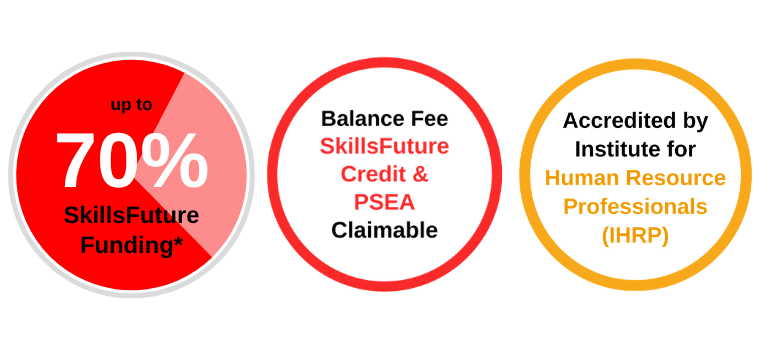
Nett Course Fee
S$1090
Course Synopsis
This course equips HR professionals and managers with practical skills to apply Generative AI and Agentic AI in recruitment, workforce planning, capability development and workforce transformation. It develops competencies in Business Innovation and Improvement, Responsible AI and Generative AI Practices, and Prompt Engineering, while reinforcing human oversight, accountability and responsible decision-making.
Participants use approved AI tools such as ChatGPT, Microsoft Copilot, Claude, Gemini and DeepSeek to enhance hiring plans, refine job requirements, analyse recruitment-funnel issues and interpret workforce data. They design, test and refine prompts and critically evaluate AI-generated outputs for accuracy, relevance, bias and limitations.
The course strengthens workforce planning capabilities by enabling participants to analyse workforce and labour-market trends, assess manpower needs, evaluate attrition and automation impacts, and develop manpower and succession forecasts using performance, competency, potential and role-readiness data. Participants apply AI-supported approaches to assess workforce engagement, capacity and capability, identify skills gaps and emerging risks, and recommend interventions such as upskilling, reskilling, redeployment and targeted hiring. They also redesign HR processes using AI, automation and Agentic AI, and evaluate workforce-mix and job-redesign options to improve organisational flexibility and resilience.
Responsible AI practices are embedded throughout, covering PDPA-aligned data handling, Workplace Fairness Act readiness, bias mitigation, transparency, human-in-the-loop validation, governance controls and decision documentation.
Through case studies and hands-on activities, participants develop practical outputs including hiring plans, workforce analyses, skills-gap assessments, prompt libraries, governance checklists, workforce-mix recommendations and AI-enabled improvement plans.
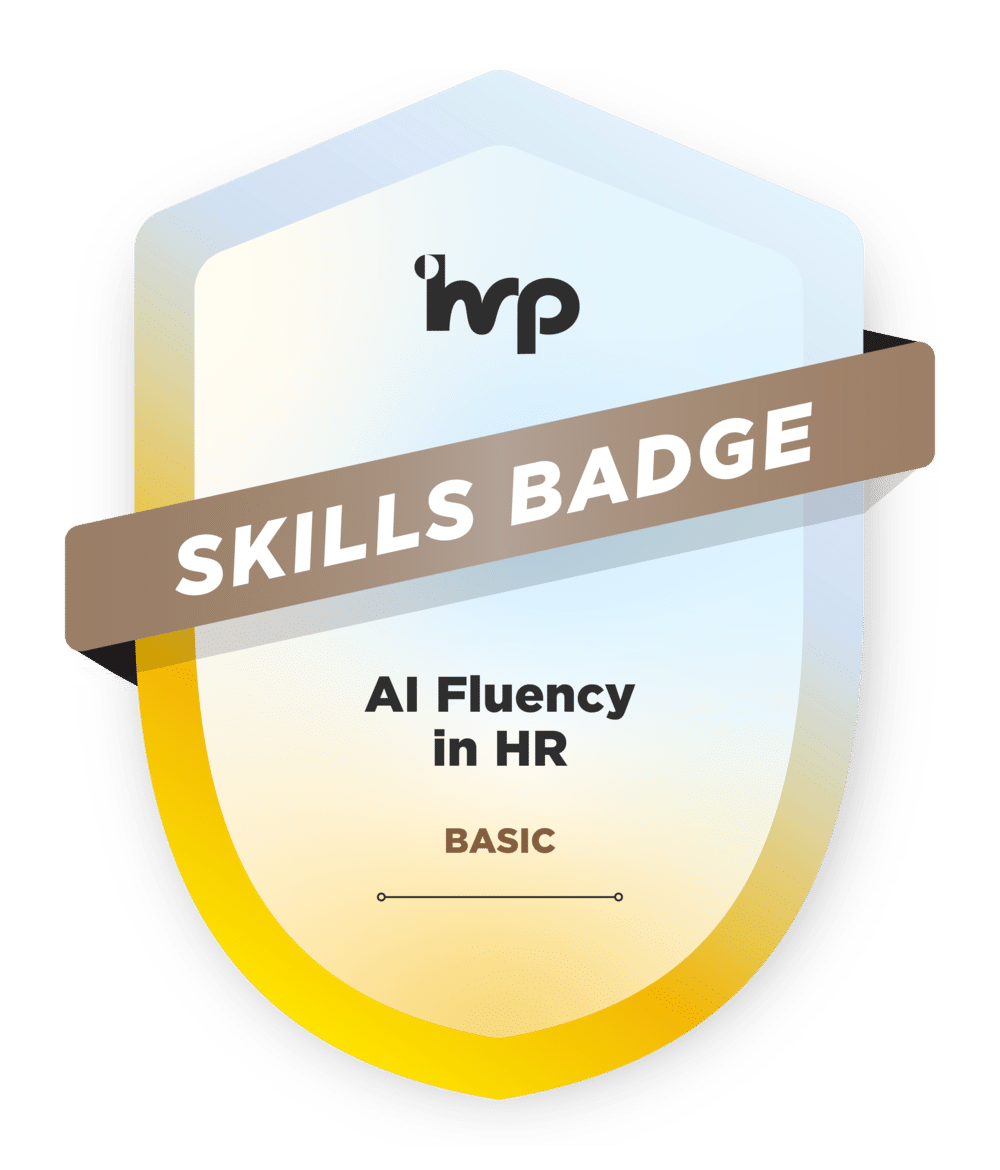
This course is accredited by the Institute for Human Resource Professionals (IHRP). Participants who complete this course are eligible for the IHRP Skills Badge in AI Fluency in HR (Basic). For more information, please visit Skills Badges for Professionals - Institute for Human Resource Professionals.
Course Objectives
By the end of this course, you should be able to:
- Evaluate AI-enabled hiring execution plans by aligning workforce requirements, recruitment channels, HR technologies and IT strategy with business objectives.
- Analyse workforce, labour-market and recruitment-channel trends to assess manpower demand, recruitment effectiveness, attrition risks and AI/Agentic AI impacts.
- Develop AI-supported manpower and succession forecasts using performance, competency, potential, capacity and role-readiness data with human validation and defensible criteria.
- Evaluate workforce engagement, capacity and capability using AI-supported analytics while applying PDPA, Workplace Fairness Act, bias controls, escalation procedures and decision trails.
- Analyse skills and capability gaps and recommend upskilling, reskilling, redeployment, succession or external hiring aligned with workforce and business priorities.
- Recommend workforce-mix and job-redesign strategies involving AI, Agentic AI, automation and outsourcing, supported by UAT, stakeholder communication, monitoring controls and a 90-day implementation roadmap.
Learning Units & Topics
LU1 – Foundations of Smarter Hiring and Candidate Experience with AI
- Smarter Hiring with AI Tools: Winning the Talent War with Zero-Ghosting & Rapid-Fire Recruitment
- Enhancing the Job Seeker Experience with AI: Delivering Premium, High-Touch Candidate Journeys at Scale
LU2 – Understanding Workforce Trends and Ethical AI Practices
- Prompt Engineering for HR Professionals: Mastering Meta-Prompting for Efficiency, WFA Readiness and AI Governance
LU3 – Data-Driven Performance Reviews and Forecasting
- Identifying Skills Gaps and Planning Training with AI: Precision Upskilling & Green Skills Mapping for the 2030 Plan
- Making Performance Reviews Fairer and Smarter with AI: Executive Storytelling & Data-Driven Performance Forecasts
- Brainstorming HR Improvements with AI: The Innovation Lab – Architecting Future-Ready HR Blueprints
LU4 – Strategic HR Planning through Elasticity and Workforce Flexibility
- Using AI to Improve Employee Engagement & Well-being: Decoding Sentiment and Implementing the ‘Right to Disconnect’
- Understanding Your Team Better with AI Insights: Leveraging Silver Talent and Age-Inclusive Job Redesign
- Automating Everyday HR Tasks with AI: Managing Agile Expansion & SPL Continuity Planning
Instructional Methods
Lectures & Case-Study Analysis: The course uses interactive lectures and guided demonstrations to introduce participants to the strategic application of Generative AI across core HR functions. Key concepts such as AI-powered recruitment, workforce analytics, sentiment analysis, governance, workplace fairness, data privacy and sustainable workplace design are explained through structured facilitation and trainer-led demonstrations, enabling participants to connect emerging concepts with practical HR workflows and decision-making.
Hands-On Lab Sessions: Practical labs require participants to use approved AI tools such as ChatGPT, Microsoft Copilot, Claude, Gemini and DeepSeek to improve recruitment content, analyse workforce data, compare transformation options, develop governance artefacts, define human-in-the-loop checkpoints and build implementation plans. Tool selection may be adjusted according to organisational policy and availability.
Scenario-Based Learning: Scenario-based learning is used to help participants apply AI solutions to authentic HR challenges. These scenarios include reducing recruitment delays, improving candidate experience, closing skills gaps, responding to attrition risks, planning for regional workforce expansion and managing workplace transitions in compliance-sensitive environments. This strengthens participants’ ability to evaluate issues and select appropriate AI-enabled interventions.
Case Study Discussions: Case study discussions are used to deepen understanding of how AI can support talent acquisition, employee experience, workforce planning, governance and organisational transformation. Through guided analysis of practical cases, participants examine business needs, legal and ethical considerations and the effectiveness of different HR strategies in achieving productivity, retention and compliance outcomes.
Group Discussions & Collaborative Learning: Collaborative learning activities and group discussions provide opportunities for participants to exchange perspectives, compare HR use cases and reflect on the organisational implications of AI adoption. This supports peer learning, broadens strategic thinking and encourages participants to evaluate HR challenges from multiple operational and leadership perspectives.
Practical Application and Skills Mastery: Participants translate learning into workplace-relevant artefacts, including process maps, journey maps, AI output review checklists, system requirements, configuration rules, UAT checklists, governance and monitoring checklists, communication plans, manager enablement guides, 90-day roadmaps and project plans. Guided practice and reflective review reinforce responsible, evidence-based and human-centred AI use.
(IHRP) AI for Recruitment Workforce Planning & HR Analytics
Course Schedule
| Course Name | Duration | Month | Date | Venue | Remarks |
|---|---|---|---|---|---|
| (IHRP) AI for Recruitment, Workforce Planning & HR Analytics TGS-2026066427 | 2 days (9:00am - 6:00pm) | November 2026 | 26,27 | JTC Summit | Weekdays |
| December 2026 | 10,11 | International Plaza | Weekdays | ||
| January 2027 | 04,05 | JTC Summit | Weekdays | ||
| 30,31 | International Plaza | Weekends | |||
| February 2027 | 18,19 | International Plaza | Weekdays | ||
| 27,28 | JTC Summit | Weekends | |||
| March 2027 | 13,14 | International Plaza | Weekends | ||
| 22,23 | JTC Summit | Weekdays |