
The Digital World Has a Security Problem.
Every day, organisations across Singapore and the globe face an invisible but ever-present threat. Hackers probe financial systems for vulnerabilities.
Phishing emails attempt to trick employees into surrendering passwords. Ransomware locks companies out of their own data and demands payment to restore access.
Cyberattacks have grown so frequent and so costly that digital security is no longer a back-office concern. It is one of the most urgent challenges organisations face today.
So, is cybersecurity in demand? The short answer is: yes, emphatically.
But more importantly, how to start a cybersecurity career if you have no background in tech? That is exactly what this guide will show you.
A Growing Need for Skilled Professionals
As businesses, government agencies, and healthcare providers deepen their reliance on digital systems, the professionals who protect those systems have become indispensable.
Yet the number of trained cybersecurity specialists cannot keep pace with surging demand. The result is a talent gap that is actively reshaping hiring across every major industry.
Whether you are exploring cybersecurity jobs in Singapore for the first time or considering a mid-career switch, the opportunities have never been greater.
This article explains:
- Why cybersecurity skills demand is rising globally and in Singapore
- What cybersecurity career paths look like
- How you can begin building real, job-ready skills through cybersecurity training in Singapore
Let’s get started.
Is Cybersecurity in Demand Today?
Is cybersecurity in demand? It is one of the most searched career queries of 2025 and 2026, and the data provides a clear answer.
Here is what is happening. Organisations across every sector, from finance to retail to healthcare, have accelerated their digital transformation. They are adopting cloud infrastructure, remote work platforms, and AI-driven systems at record speed.
Each of these transitions creates new opportunities. Unfortunately, those opportunities are for cybercriminals too.
As a result, the demand for cybersecurity professionals has grown faster than training programmes and universities can supply. That gap? It is exactly where you come in.
A Workforce Gap That Keeps Growing
Let us look at the numbers because they tell an important story.
Worldwide, approximately 4.8 million cybersecurity roles remain unfilled. That figure has grown by more than 40% in just two years. To meet current global demand, the cybersecurity workforce would need to expand by 87%.
Source: Cybersecurity Talent & Workforce Shortage Stats (Dec 2025)
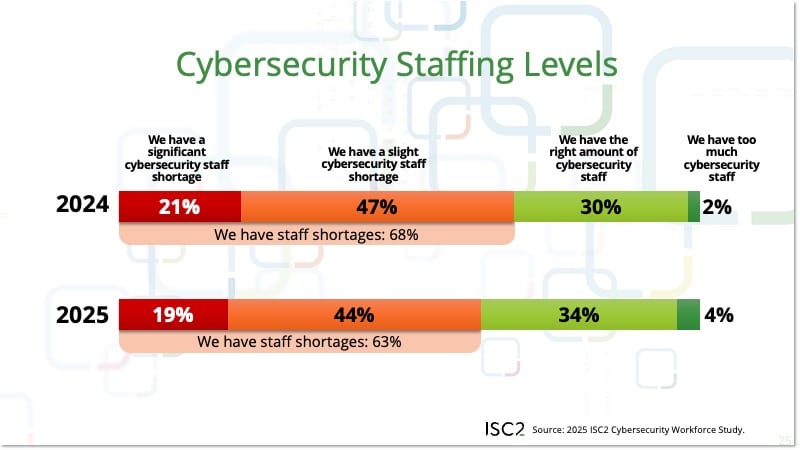
What does this mean for you personally? Employers are not just looking for cybersecurity professionals; they are competing for them.
And in Singapore, where the cybersecurity skills shortage is especially acute, your timing could not be better.
Why This Demand is Here to Stay
The forces driving this demand are not temporary. Cloud adoption, AI integration, e-commerce growth, and the expansion of Internet of Things (IoT) devices are all permanent features of the modern economy.
Every single one of these creates more entry points for cybercriminals to exploit. That is why organisations need professionals like you to:
- Monitor systems around the clock
- Detect intrusions before they cause damage
- Build resilient security architectures from the ground up
If you are exploring a cybersecurity career, know this: the demand is real, it is growing, and it is not slowing down. The only question left is whether you will step into it.
Now that you understand the global demand, let us look at why Singapore specifically has become one of the most urgent hiring grounds for cybersecurity talent.
Why Cybersecurity Demand is Growing in Singapore
You already know global demand is soaring. But Singapore? It is a different level entirely.
A Prime Target in a Digital Economy
Singapore’s position as a global financial hub and its ambitious Smart Nation vision have made it both a prime digital economy and a high-value target for cyber threats.
The government’s drive to digitise public services, the Monetary Authority of Singapore’s push for digital banking, and Singapore’s role as a regional headquarters for multinational corporations all contribute to an extraordinary concentration of sensitive data and critical infrastructure.
An Escalating Threat Environment
This digital intensity comes with a cost. According to the CSA’s Singapore Cyber Landscape 2024/2025 Report:
- Phishing attempts surged 49% in 2024, with over 6,100 reported cases
- Ransomware attacks rose 21%, especially targeting SMEs in professional services
- Singapore ranked 7th most attacked country globally for DDoS attacks in Q4 2024
(Source: CSA Singapore Cyber Landscape 2024/2025)
Operation Cyber Guardian: A Wake-Up Call
Real incidents back up these statistics.
In February 2026, CSA disclosed Operation Cyber Guardian, Singapore’s largest and longest-running anti-cyber threat operation. A Chinese-linked hacking group had infiltrated all four major telecom operators: Singtel, StarHub, M1, and SIMBA Telecom.
Over 100 cyber defenders from six government agencies were mobilised to contain the threat.
(Source: Computer Weekly)
Every Industry Is at Risk
Banking, healthcare, e-commerce, and government agencies each hold enormous volumes of personal and financial data. A single breach can cost millions and destroy years of customer trust.
That is why organisations must maintain skilled security teams to meet both operational needs and regulatory requirements from MAS and PDPC.
Key stat: Cybersecurity job postings in Singapore rose 57% from 2024 to 2025, the highest increase in three years. Cybersecurity roles are officially classified as skills-in-shortage by MOM and IMDA.
(Source: Cyber Security Salary in Singapore 2026)
The demand is clear. Now let us look at the challenge Singapore faces: a serious shortage of trained cybersecurity professionals. This gap is where your opportunity begins.
The Cybersecurity Talent Shortage in Singapore
A Gap on the Official Record
Singapore faces a documented shortage of cybersecurity professionals. Industry estimates place unfilled cybersecurity roles at approximately 4,000.
This gap has earned the field a place on the Ministry of Manpower’s (MOM) official 2026 Shortage Occupation List (SOL), roles where local talent supply cannot meet demand.
(Source: ITEL – Cybersecurity Jobs in Singapore 2025)
Why Organisations Struggle to Find the Right People
Filling a cybersecurity role takes time. Security positions routinely remain open for six months or longer. Even then, many candidates lack the hands-on experience needed to contribute from day one.
The pool of job-ready specialists is simply too small relative to demand. Cybersecurity is also a highly specialised field.
A candidate strong in penetration testing may have little experience in cloud security or incident response. Organisations often cannot find a single hire who ticks every box.
For businesses in regulated industries such as banking and healthcare, leaving security roles vacant creates direct risks to compliance, customer data, and business continuity.
(Source: Cybersecurity Talent Shortage Stats)
Burnout Is Making the Shortage Worse
Attrition is also driving the shortage. A Bitdefender 2025 report found that 64% of cybersecurity professionals in Singapore are experiencing burnout, and 53% plan to leave their roles within the next year, well above the global average of 40%.
This creates an ongoing need for new professionals entering the pipeline.
(Source: SecurityBrief Asia)
What this means for you: If you are considering entering cybersecurity, you are stepping into one of the most undersupplied fields in Singapore’s economy. The shortage is your opportunity.
Cybersecurity Career Opportunities
More Roles Than You Might Expect
One of the great advantages of cybersecurity as a field is its breadth. There is no single “cybersecurity job” — there are dozens of specialised roles across the security function, each requiring a different mix of skills. Here are some of the most in-demand career paths:
1. Security Analyst (SOC Analyst)
Monitors network traffic and security systems in real time, investigates alerts, and escalates incidents. This is one of the most common entry points into the field.
2. Penetration Tester (Ethical Hacker)
Simulates cyberattacks to identify vulnerabilities before malicious actors can exploit them. Requires great technical skill and creativity.
3. Incident Responder
Leads the organisation’s response when a security breach occurs; containing damage, recovering systems, and conducting post-incident analysis.
4. Security Engineer
Designs and builds the security architecture of an organisation’s systems, including firewalls, authentication systems, and encryption protocols.
5. Cloud Security Specialist
Focuses on securing cloud-based infrastructure, a rapidly growing need given that over 80% of large enterprises in Singapore now operate on cloud platforms.
6. Cybersecurity Consultant
Advises organisations on their security strategy, risk posture, and compliance with regulations such as MAS TRM guidelines or ISO 27001.
What You Can Expect to Earn
The financial rewards reflect how competitive the talent hunt has become.
- Entry-level roles start around S$42,000 per year
- Experienced professionals earn well above S$180,000 per year
- Mid-career switchers moving into niche areas can expect salary increments of 20–25% compared to their previous roles
Where These Roles Exist
These roles exist across finance, government, technology, healthcare, logistics, and retail. In Singapore, banks are among the highest-paying employers, given MAS requirements for robust security teams.
Government agencies, technology firms, and multinational corporations all maintain dedicated security operations.
Now that you know what roles are available, let us go back to the basics. Understanding core cybersecurity principles will give you the foundation every employer expects.
Core Cybersecurity Principles Every Beginner Should Know
The CIA Triad
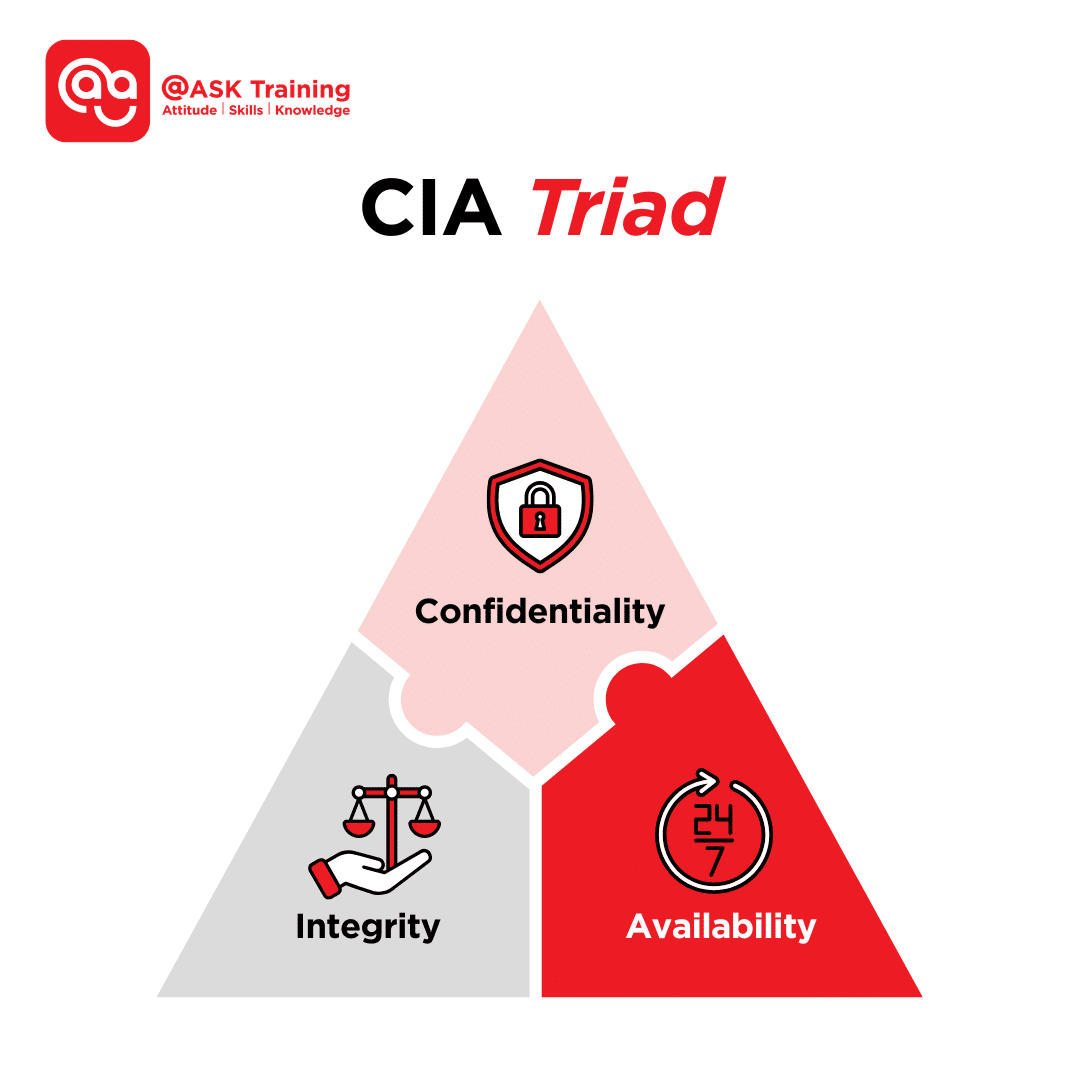
Before diving into tools and techniques, it helps to understand the foundational principles that guide every security decision. Cybersecurity professionals refer to these as the CIA Triad:
- Confidentiality: Information should only be accessible to authorised people. Techniques include encryption, access controls, and multi-factor authentication.
- Integrity: Information must not be altered without authorisation. Hash functions, digital signatures, and audit logs support data integrity.
- Availability: Systems and data must be accessible to authorised users when needed. Defending against DDoS attacks and building redundant systems both support availability.
The Principle of Least Privilege
Every security decision an organisation makes, from password policies to firewall configurations, can be traced back to one or more of these three principles.
Understanding the CIA Triad gives you a mental framework for evaluating any security situation you encounter.
A related concept is the principle of least privilege: users and systems should only have access to the minimum resources they need to perform their function. Limiting access reduces the damage that can result if an account is compromised.
Common Cybersecurity Threats Businesses Face
Know Your Enemy
To defend against threats, you first need to understand what those threats look like. Here are the most prevalent attack types targeting organisations in Singapore and globally in 2026:
1. Phishing
- Deceptive emails or messages designed to trick recipients into clicking malicious links or revealing credentials
- AI-generated phishing emails now have a 60% higher click rate than traditionally crafted ones
- In Singapore, attackers use generative AI to craft highly tailored messages targeting government agencies, fintech firms, and regional operations
2. Ransomware
- Malware that encrypts an organisation’s files and demands payment for the decryption key
- Business services accounted for 35% of ransomware incidents in early 2026
- Singapore remains a consistent target, with ransomware activity holding steady through December 2025 to February 2026
3. AI-Powered Attacks
- 87% of cybersecurity leaders identified AI-related vulnerabilities as the fastest-growing cyber risk of 2025 (WEF Global Cybersecurity Outlook 2026)
- Attackers use AI to automate reconnaissance and craft deepfake impersonations of senior executives
- AI allows attackers to scale attacks at unprecedented speed
4. Supply Chain Attacks
- Threat actors target managed service providers and IT integrators to reach multiple organisations through a single breach
- CSA warned in April 2026 that a single compromised external tool can grant attackers deep access to internal systems
- Consequences include data theft, operational downtime, and severe reputational damage
5. Social Engineering
- Manipulating people rather than systems.
- In Singapore, attackers are increasingly exploiting WhatsApp and SMS to impersonate IT administrators, vendors, and executives
- The goal is to trick staff into granting access or transferring funds.
6. Distributed Denial-of-Service (DDoS) Attacks
- Flooding a server or network with traffic to render it unavailable
- Cyberattacks on organisations in Singapore rose 22% year on year in March 2026
- Singapore organisations face an average of 2,695 attacks per week, well above the global average of 1,995
(Sources: SecurityBrief Asia, WEF Global Cybersecurity Outlook 2026, Nucleo Consulting)
A Real-World Example
An employee at a Singapore logistics company receives a WhatsApp message from their CEO, complete with a voice note that sounds exactly right. This is a deepfake social engineering attack, one of the fastest-growing cybercrimes in 2026.
The message asks for an urgent fund transfer to a new vendor account. A trained cybersecurity professional would spot the warning signs immediately:
- Urgency in the request
- An unusual communication channel (WhatsApp instead of email or official platform)
- An unverified payment request
They would stop the transfer before any damage is done.
For context, scams and cybercrime in Singapore fell by 24.8% in 2025, with total losses dropping from S$1.1 billion to S$913.1 million.
However, the median loss per case rose from S$1,389 to S$1,644, meaning attacks are becoming more targeted and costly per victim.
(Source: Singapore Police Force)
Understanding threats is one thing. Knowing how organisations defend against them is what will make you job-ready.
Next, let us explore the security measures organisations use to prevent attacks.
Security Measures Organisations Use to Prevent Attacks
Defence Starts With Preparation
Understanding the threats is only half the picture. Equally important is understanding how organisations defend themselves, because these defensive activities are exactly what you will be doing as a cybersecurity professional.
1. Vulnerability Assessments
- Systematic reviews to identify weaknesses before attackers do
- The PDPC found 82% of enforcement actions involved weak security measures that routine assessments could have caught
2. Patch Management
- Regular updates to close known vulnerabilities
- Example: WannaCry (2017) exploited a patch released two months earlier. Organisations that did not apply it suffered severe consequences.
3. Security Log Analysis
- Reviewing logs to detect suspicious activity
- Example: The 2018 SingHealth breach saw logs flag unusual activity weeks before, but warnings were not acted upon promptly
4. Access Control Policies
- Strict rules on who accesses what, applying least privilege
- Example: CSA flagged hypervisor attacks where hidden virtual machines gained prolonged access; stricter controls could have prevented this
5. Incident Response Plans
- Pre-defined procedures to detect, contain, and recover
- Having a plan before an attack reduces response time and damage
The Value of Early Detection
Proactive threat detection is key across all of these practices. The organisations that suffer the most damage from cyberattacks are those that discover a breach weeks or months after it happened.
Security professionals who can detect threats early, while an attacker is still in the reconnaissance phase, provide enormous value.
(Sources: PDPC, Cloudflare, Clyde & Co)
Cybersecurity Tools Used by Security Professionals
Cybersecurity professionals do not rely on intuition alone; they use a comprehensive toolkit of software to detect, analyse, and respond to threats.
Familiarity with these tools is one of the most practical skills you can develop:
1. Wireshark
- A network packet analyser that captures and inspects traffic flowing across a network
- Invaluable for detecting suspicious communications and understanding attack patterns
2. Nmap
- A network scanning tool used to discover hosts and services on a network
- Security professionals use it to map infrastructure and identify open ports that could be exploited
3. Metasploit
- A penetration testing framework for simulating attacks against systems
- Enables professionals to identify vulnerabilities, legally and ethically
4. Nessus / OpenVAS
- Vulnerability scanners that automatically check systems against databases of known vulnerabilities
- Produce detailed reports for remediation
5. Splunk / SIEM Platforms
- Security Information and Event Management (SIEM) systems aggregate and analyse log data from across the network
- Use rule sets and machine learning to flag anomalies and detect threats in real time
6. Kali Linux
- A Linux-based operating system purpose-built for cybersecurity work
- Comes pre-loaded with over 300 security tools
- The go-to environment for penetration testers and one of the first platforms beginners encounter in hands-on training
You Don’t Need to Master Everything at Once
You do not need to master all of these tools before entering the field. The priority at the beginner level is to understand what each category of tool does and to gain hands-on experience with at least a few of them.
Structured training programmes typically include guided labs where you practise using these tools in simulated environments, a far more effective approach than simply reading about them.
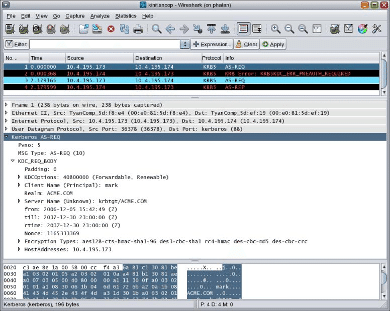
Screenshot of Wireshark capturing network traffic
Tools are essential, but they are only part of the equation. Next, let us look at the skills you actually need to start a cybersecurity career, and no, you do not need a computer science degree.
Skills Needed to Start a Cybersecurity Career
You Don’t Need a Computer Science Degree
You do not need a CS degree or years of coding experience. You need a willingness to learn and a structured approach to building the right foundations.
1. Technical Skills
What employers look for:
- Networking fundamentals (TCP/IP, DNS, HTTP, firewalls, routing)
- Familiarity with Linux and Windows operating systems
- Basic vulnerability scanning and assessment techniques
- Ability to read and interpret security logs and alerts
- Awareness of common attacks: phishing, SQL injection, man-in-the-middle
- Introduction to cryptography and encryption
2. Conceptual Knowledge
The frameworks, regulations, and thinking models that guide security decisions:
- Cybersecurity frameworks (CIA Triad, OWASP Top 10, NIST)
- Singapore regulations: MAS TRM guidelines, PDPA obligations
- Threat modelling — thinking like an attacker to identify risks
3. Soft Skills Matter Too
Singapore hiring managers value:
- Analytical thinking and attention to detail
- Clear communication of technical risks to non-technical stakeholders
- “Hybrid” professionals who combine technical expertise with business context from finance, operations, logistics, or legal sectors
Career Switcher to Cybersecurity Professional
The skills list may look long, but many Singaporeans are already making this leap.
- 74% of Centre for Cybersecurity Singapore graduates came from non-IT backgrounds (logistics, finance, sales, operations)
- Within months of training, many matched or exceeded junior-to-mid-level peers
What separates successful switchers:
- Hands-on labs
- A portfolio of practical work
- At least one recognised certification
In 2026, a TryHackMe profile or GitHub repository of security reports carries as much weight as a formal qualification.
(Source: Cybersecurity Career Switch Guide 2025)
You know what skills to build. Now, let us talk about how to actually start learning, the right way.
The Best Way to Start Learning Cybersecurity
Theory Alone Is Not Enough
Cybersecurity is not a textbook field. It combines theory, tools, and hands-on analysis. The most effective learners practise regularly in realistic environments.
Your Step-by-Step Roadmap
Here is a practical roadmap for getting started:
1. Build fundamentals first
Learn networking and operating systems. You cannot analyse traffic you do not understand. Start with CompTIA Network+ materials and free Linux courses.
2. Get hands-on with labs
Use TryHackMe or Hack The Box — guided, gamified environments to practise real-world skills safely. Start with beginner rooms and work up.
3. Earn a foundational certification
- CompTIA Security+ – Widely recognised by Singapore employers
- ISC2 Certified in Cybersecurity (CC) – Newer, free-to-sit entry-level option
4. Enrol in a structured training programme
Self-study has limits. A structured course with hands-on labs and industry-experienced instructors accelerates your learning and ensures you cover critical areas.
5. Build a portfolio
Document your labs, vulnerabilities identified, and techniques practised. A GitHub repo or personal blog shows initiative and practical capability.
Keep Learning — The Field Never Stands Still
The cybersecurity field rewards curiosity and persistence. The professionals who succeed are those who never stop learning because the threat landscape never stops evolving.
You have the roadmap. Now, let us look at how structured training in Singapore with government support can get you there faster.
Learning Cybersecurity Through Structured Training in Singapore
Government-Backed Support Makes It Accessible
For many beginners, the fastest path into cybersecurity is a structured course. Singapore’s education ecosystem is strong and well-supported by government funding.
SkillsFuture Singapore (SSG) funds a wide range of cybersecurity courses, making training accessible at a fraction of the standard fee.
- Singaporeans aged 25+ can use SkillsFuture Credits to offset fees
- Those aged 40+ may qualify for the Mid-Career Enhanced Subsidy (MCES), covering up to 90% of course fees
A Dedicated Pathway for Career Switchers
The SkillsFuture Career Transition Programme (SCTP) is designed for mid-career professionals pivoting into cybersecurity. This train-and-place programme combines classroom learning with practical labs and job placement support.
What You Will Learn in a Cybersecurity Programme
A well-structured programme builds job-ready capabilities. Here is what to expect:
- Cybersecurity Fundamentals: Terminology, CIA Triad, threat taxonomies, and attacker mindsets
- Vulnerability Assessments: Identify weaknesses using industry-standard scanning tools. Learn to prioritise findings and recommend fixes.
- Threat Identification & Analysis: Recognise indicators of phishing, malware, and unusual network activity
- Security Tool Usage: Hands-on experience with Wireshark, Nmap, and SIEM platforms like Splunk
- Cloud Security Fundamentals: Over 80% of large enterprises in Singapore operate on cloud platforms, and cloud security is essential
- Hands-On Lab Environments: Simulated environments where you practise analysing live traffic and responding to real threats
What to Look For in a Cybersecurity Course
When evaluating a programme in Singapore, look for:
- Coverage of fundamentals (CIA Triad, threat taxonomy, risk frameworks)
- Hands-on labs with real tools (Wireshark, Nmap, vulnerability scanners)
- Modules on network traffic analysis and threat identification
- Instruction from practitioners with industry experience
- SkillsFuture funding eligibility and recognised certifications
Here at @ASK Training, our cybersecurity courses range from:
- Cybersecurity Essentials (3 days)
- Cybersecurity and Ethical Hacking (4 days)
- Advanced IT Security and Cybersecurity (5 days)
All are taught by industry veterans, include hands-on immersive learning, and are SkillsFuture-eligible, with up to 90% SSG subsidies for eligible learners.
A practical option to explore as you compare your learning journey!
Wrapping Up: Your Path Into one of Singapore’s Most In-Demand Careers
Cybersecurity is among the most critically undersupplied professions in Singapore and globally. As digital systems expand and threats grow more sophisticated, the need for skilled professionals will only intensify.
CSA data confirms it: phishing up 49%, ransomware up 21%, and Singapore now ranks among the most-targeted nations.
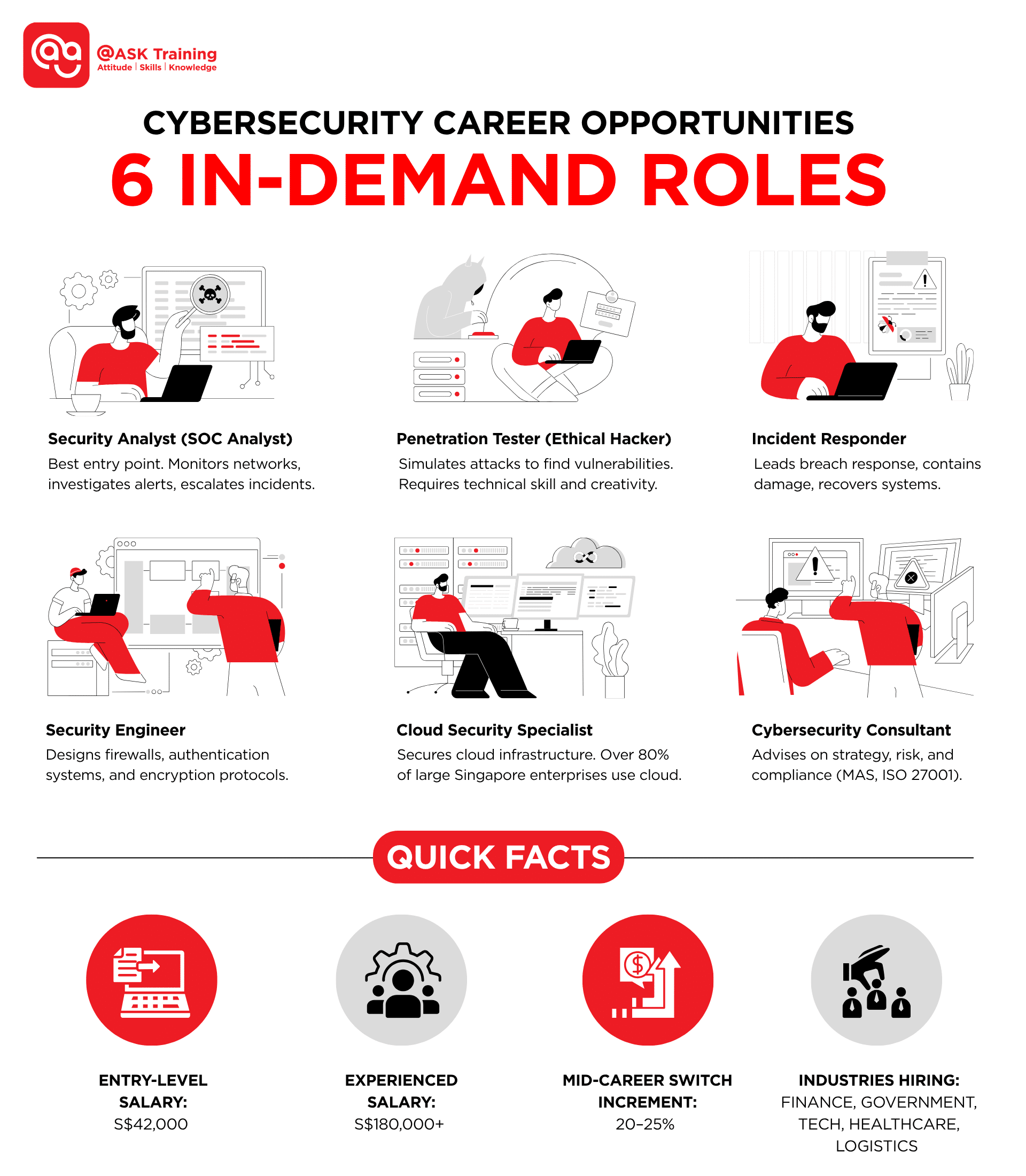
Here’s a recap of Cybersecurity roles you can start exploring:
Now Is the Time to Start
The conditions have never been more favourable. The talent gap is real. Government training support is substantial. And the work, protecting organisations, customers, and critical infrastructure, is genuinely meaningful.
Start now. Build fundamentals. Get hands-on with labs. Explore structured training programmes in Singapore.
Your next career chapter could be one of the most impactful choices you ever make.
Related Courses
- IT Courses
- Cybersecurity Essentials(offered as a 3-day Modular Course for those seeking focused training)
- Cybersecurity and Ethical Hacking
◆◆◆
Related Articles
Article Topics
- Is Cybersecurity in Demand Today?
- Why Cybersecurity Demand is Growing in Singapore
- The Cybersecurity Talent Shortage in Singapore
- Cybersecurity Career Opportunities
- Core Cybersecurity Principles Every Beginner Should Know
- Common Cybersecurity Threats Businesses Face
- Security Measures Organisations Use to Prevent Attacks
- Cybersecurity Tools Used by Security Professionals
- Skills Needed to Start a Cybersecurity Career
- The Best Way to Start Learning Cybersecurity
- Learning Cybersecurity Through Structured Training in SG
- Wrapping Up