
If you’re considering a mid-career tech switch and asking, “Is it difficult to learn cybersecurity?”
You might be wondering whether you’re starting too late, whether a lack of IT background will hold you back, or how you’ll balance learning with work and personal commitments.
The truth is, cybersecurity is challenging, but it is also learnable. With a structured approach and consistent effort, you can build cybersecurity skills step by step without needing years of technical experience upfront.
In Singapore, you can explore courses that may be eligible for SkillsFuture funding, subject to individual eligibility and prevailing criteria.
If you’re looking for a practical starting point, @ASK Training’s Cybersecurity Essentials course is designed to help you build foundational knowledge through real-world concepts and hands-on learning.
Before you decide if cybersecurity is a good career for you, let’s break down what makes it feel intimidating and why that perception is often misplaced.
Why Cybersecurity Feels Hard to Learn
Is cybersecurity hard to learn? It often feels that way at first, and for understandable reasons:
- A Fast-Moving Field: Threats and tools evolve constantly, which means learning never really stops.
- A Language of Its Own: Technical terms and certification acronyms (like CISSP, CEH, SOC) can feel overwhelming initially.
- The “Hacker” Stereotype: Many believe you need to be a coding expert or a “tech genius”—a myth that excludes many capable people.
Here’s the important shift in perspective:
Cybersecurity isn’t one job; it’s a broad field with roles in governance, risk management, compliance, operations, and human training.
You don’t need to be a programmer to succeed. Curiosity and persistence matter far more than a technical pedigree.
The good news is that once you understand the landscape, the path forward becomes much clearer.
What Makes Cybersecurity Easier Than You Think
Getting started today is more structured and supported than ever, especially in Singapore.
- Step-by-Step Pathways: Modern cybersecurity courses for beginners are designed to take you from IT basics to security principles progressively, building confidence as you learn.
- Hands-On, Accessible Training: With SkillsFuture funding, quality training is within reach. The best courses include labs and simulations, so you learn by doing.
- Community and Resources: From online forums to local meetups, you’re never learning alone. Support is everywhere once you start looking.
This supportive ecosystem turns a daunting field into a manageable, step-by-step learning journey.
The Core Skills You Need (and How to Build Them)
You don’t need to master everything at once. Focus on building these foundational learning cybersecurity skills:
- Technical Basics: Understand how networks, systems, and data work.
- Analytical Thinking: Spot risks, identify patterns, and solve problems logically.
- Security Awareness: Recognise common threats like phishing and malware.
- Communication: Explain security concepts to both technical and non-technical audiences.
How to build them:
- Enrol in a beginner cybersecurity course Singapore professionals trust.
- Practice using free platforms like TryHackMe or CyberDefenders.
- Join communities and pursue entry-level certifications like CompTIA Security+.
By focusing on these core areas, you build a versatile foundation that applies to nearly every cybersecurity role.
Why Mid-Career Professionals Have an Advantage
If you’re making a mid-career tech switch, your experience is a strength, not a setback.
Professionals with backgrounds in finance, law, operations, or management bring transferable skills that cybersecurity roles need:
- Communication & Leadership: Experience in managing teams, projects, and stakeholders.
- Governance & Compliance Knowledge: Understanding of policies, risk, and regulatory requirements.
- Critical Thinking & Project Management: Ability to navigate complex challenges and deliver outcomes.
Singapore’s focus on adult learning, through e.g., SkillsFuture Mid-Career Enhanced Subsidy (MCES), SkillsFuture Mid-Career Training Allowance, and tailored programmes, makes this transition even more feasible.
This means your past career isn’t just relevant, it’s a competitive advantage in your new field.
Common Challenges and How to Overcome Them
It’s normal to face hurdles when starting a new field. Anticipating these common obstacles is the best way to prepare for them and stay on track.
- Balancing study with work and family: Juggling existing commitments with a new learning journey is a top concern for mid-career learners.
- Overcoming self-doubt or comparison: It’s easy to doubt your abilities when you encounter new concepts or compare your starting point to someone else’s expertise.
- Managing information overload: The sheer volume of tools, acronyms, and concepts in cybersecurity can feel overwhelming at first.
You can navigate these challenges with practical strategies:
1. SetSmall, Specific Learning Goals
- Break your study into very small, daily or weekly objectives (e.g., “complete one 30-minute module” or “solve one practice lab”).
- This makes progress tangible and sustainable.
2. JoinPeer or Online Study Groups
- Finding your tribe provides accountability, moral support, and shared knowledge.
- You’ll learn you’re not alone in the journey.
3. FocusOn Progress, Not Perfection
- Track what you’ve learned and celebrate small wins.
- Cybersecurity is a marathon, not a sprint.
Remember: Persistence and a growth mindset are your greatest assets. Every expert in the field today started as a beginner.
Your professional maturity and problem-solving approach are significant advantages as you learn.
How to Start Learning Cybersecurity (The Smart Way)
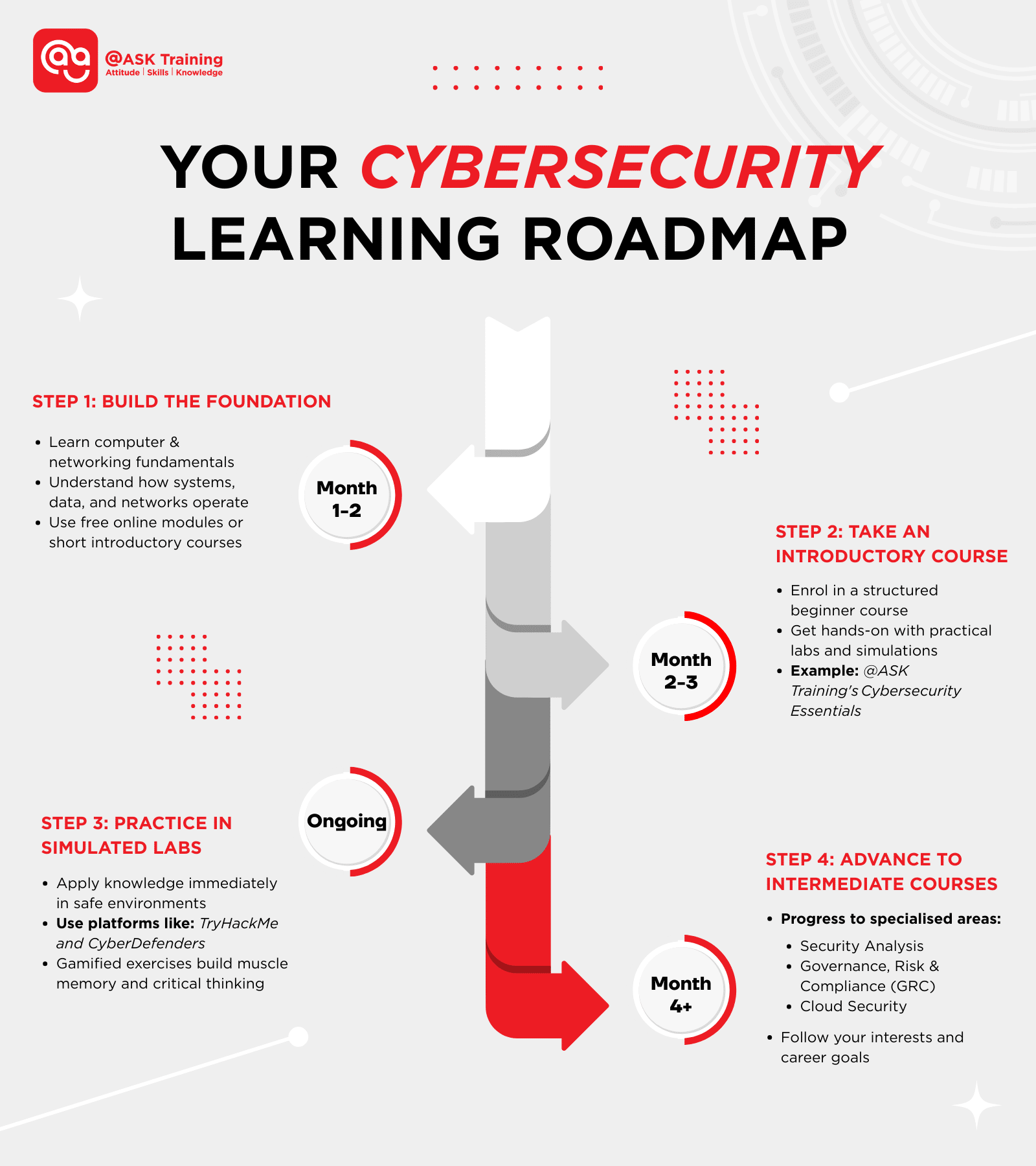
A clear, achievable roadmap turns uncertainty into action. Follow this structured, four-step path to build your skills confidently and efficiently.
1. Build the Foundation (Month 1–2)
- Begin with computer and networking fundamentals.
- Solidify your understanding of how systems, data, and networks operate through free online modules or short introductory courses.
- This core knowledge is essential.
2. Take a Structured Introductory Course (Month 2–3)
- Enrol in a comprehensive introductory cybersecurity course.
- For example, @ASK Training’s Cybersecurity Essentials is designed to give beginners hands-on exposure to real-world security concepts through practical labs and simulations.
3. Practice Using Simulated Labs (Ongoing)
- Apply your knowledge immediately in safe environments.
- Platforms like TryHackMe or CyberDefenders offer guided, gamified online exercises that build muscle memory and critical thinking without risk.
4. Advance to Intermediate Courses (Month 4+)
- Based on your interests, you can then progress to more intermediate and applied courses in specialisations like security analysis, governance (GRC), or cloud security.
The key is to start small and stay consistent. Leveraging SkillsFuture Mid-Career TA-eligible courses can make this journey financially accessible, allowing you to invest in quality training and explore cybersecurity with greater confidence.
With this roadmap, what once seemed like an overwhelming career change becomes a series of achievable, consecutive steps.
Final Thoughts: Is Cybersecurity a Good Career?
Let’s return to the core question: Is cybersecurity hard to learn? It presents a challenge, like any valuable and in-demand skill.
However, it is absolutely learnable with the right structure and persistence.
Is cybersecurity a good career? For mid-career professionals, the answer is a definitive yes.
It offers resilient demand, competitive salaries, and the profound satisfaction of meaningful, protective work.
Your existing experience in communication, project management, and critical thinking is not just relevant; it’s a powerful advantage in this field.
Your journey begins with a single, deliberate step. We encourage you to start your journey, no matter your background.
Explore a foundational course, connect with a learning community, and build the confidence that comes with gaining critical, future-ready skills!
Related Courses
◆◆◆