
You’ve crafted the business plan, secured the funding, and defined your market. But your most critical battle remains: the war for talent.
For leaders of SMEs, growing startups, and public sector agencies, this is the frontline. You’re competing with giants whose salary offers can dwarf your own.
But what if your greatest weapon wasn’t your wallet, but your vision?
In our previous article, we explored the Four Leadership Archetypes of the Three Kingdoms. We saw how Liu Bei, the Virtuous Leader, rose from a humble straw-sandalmaker to found the Shu Han kingdom.
His secret? He couldn’t outspend his rivals, Cao Cao and Sun Quan, so he out-inspired them. He attracted and retained the most brilliant, loyal minds by offering them a cause worth serving.
His courtship of the legendary strategist Zhuge Liang is a masterclass in strategic recruitment—a playbook that remains relevant today.
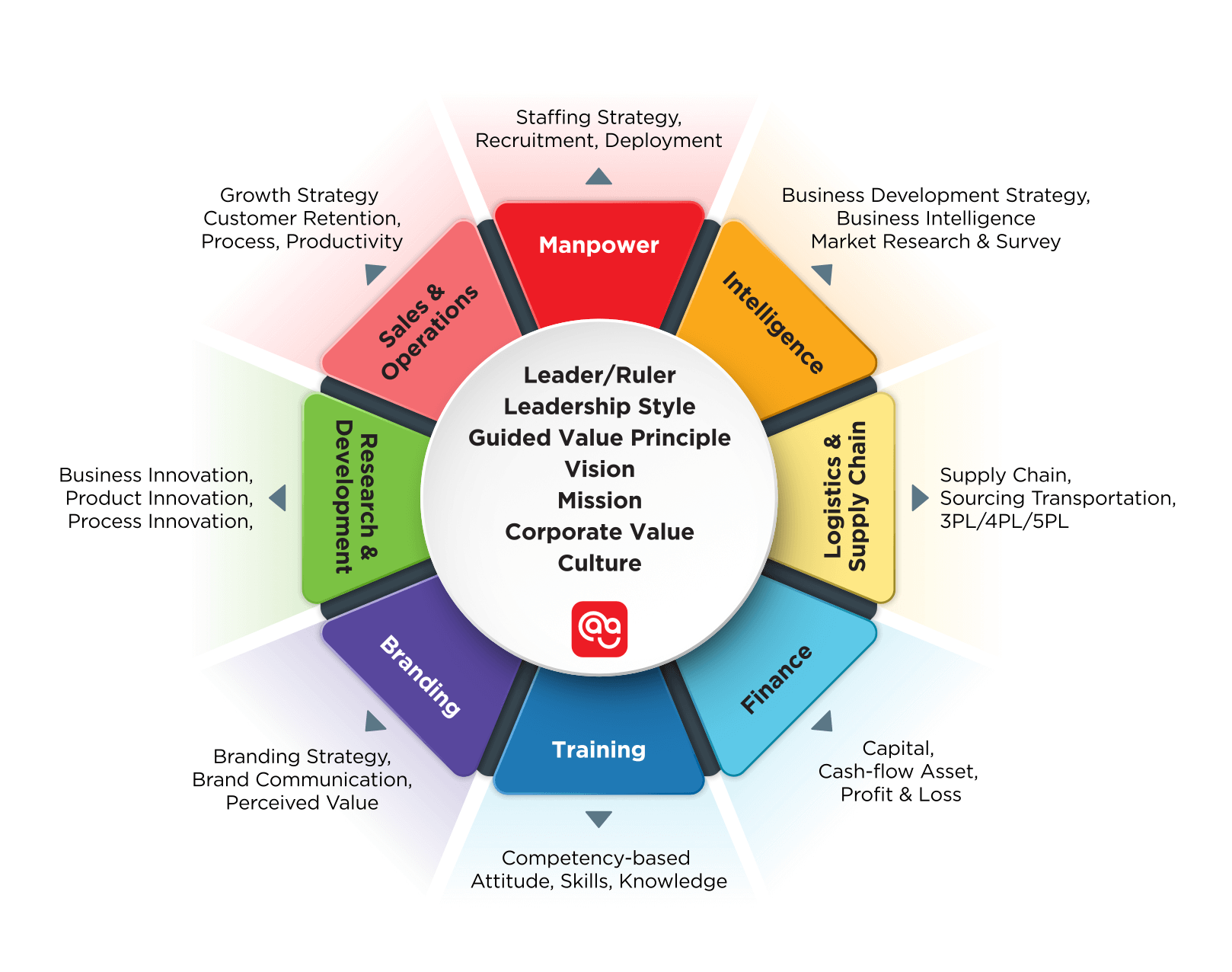
Using the “Eight Trigrams Framework” as our map, we will decode how to transform your “Manpower” strategy from a transactional staffing exercise into a mission-driven campaign to secure your own “key commanders.”
Let’s dive in.
I. The “Three Visits” as a Strategic Manpower Blueprint
To win today’s war for talent, we must first decode the timeless strategy behind Liu Bei’s legendary recruitment of Zhuge Liang.
This ancient story provides a powerful framework for aligning your talent acquisition with your organisation’s vision.
The Romance vs. The Reality
The Romance: What the Story Tells Us
- Liu Bei, a nobleman with a fading claim to power, seeks out the brilliant “Crouching Dragon”
- He makes three difficult journeys to Zhuge Liang’s remote cottage
- He faces rejection, bad weather, and frustrated generals
- His ultimate display of patience—waiting quietly while Zhuge Liang naps—wins over the great strategist
The Reality: What History Teaches Us
- The “three visits” symbolise a persistent, sincere commitment rather than literal events
- Zhuge Liang was more than a strategist—he brought crucial political connections and legitimacy
- For Liu Bei, this was a strategic move to acquire his most important “Key Commander”
- The real lesson: Genuine respect and shared purpose outweigh mere persistence
Deconstructing the Strategy with the Framework
Liu Bei’s approach perfectly demonstrates how recruitment intersects with core business functions:
- Leader/Ruler (Vision/Mission)
- Liu Bei didn’t offer a job; he offered a purpose: “Restore the Han Dynasty.“
- This was his ultimate vision, a mission that provided profound meaning beyond the daily grind of warfare.
- Manpower (Staffing Strategy)
- He didn’t need just another soldier. He identified a specific, critical gap in his ranks: a Chief Strategist.
- The role of this “Key Commander” was clearly defined—to provide a long-term plan to unify the land.
- Training (Culture & Values)
- Liu Bei wasn’t just offering a job, but a culture of growth and respect. He promised intellectual autonomy and a shared destiny – key factors in any professional’s long-term development.
- This focus on cultural fit and mutual growth is the foundation of a strong organisation, ensuring that a “Key Commander” is set up for success from day one.
By viewing recruitment through this multifaceted lens, we can now translate this ancient blueprint into a modern, actionable process for attracting top-tier talent.
II. The Modern “Three Visits”: Recruit a Partner, Not an Employee
The “Three Visits” is your blueprint for a three-phase recruitment campaign. It’s designed to engage top-tier, passive candidates by offering them a partnership, not just a job.
This requires a level of patience most companies lack. Rushing a hire to fill a seat is costly. A single misaligned hire can damage your culture and derail your strategy.
This is why the principle of “hire slow, fire fast” is critical, and this three-visit framework makes it possible.
Let’s break down how to execute this strategy today.
1. The “First Visit”: Strategic Intelligence & Outreach
This is your pre-approach. Before you even make contact, you must do your homework.
Framework Link: Intelligence – How will you gather crucial information?
Your Mission:
- Deeply research your “Zhuge Liang.” Go beyond their LinkedIn profile.
- Study their published work, their career path, and—most importantly—identify their core passions.
- The most effective approach involves strategic headhunting with aligned expectations and values from the very first contact.
Actionable Tip
- Your first message must not be generic. Reference a specific accomplishment of theirs and immediately connect it to your company’s mission.
- Example: “I was impressed by your article on X. Your thinking on Y is exactly what we need to achieve our mission of Z.“
- It demonstrates genuine respect and frames the conversation around shared purpose from the very first word.
This initial, intelligence-driven contact sets the stage for a more immersive experience, moving the candidate beyond interest into genuine engagement.
2. The “Second Visit”: The Culture Immersion
Once you have their attention, the next critical step is to prove your claims by bringing them into your world and letting them experience your culture firsthand.
Framework Links: Operations & Branding
Your Mission:
- Show, Don’t Tell: If you value “Great Service,” have them join a client call. If you preach “Collaboration,” invite them to a team meeting.
- Showcase Your Team: Let them see the talented, collaborative people (your “Guan Yu and Zhang Fei”) they would be proud to lead.
Actionable Tip:
- Invite the candidate for a “working session” or a casual team lunch.
- The goal is to let them visualise their future and feel the impact of their potential work.
A successful immersion experience naturally leads to the final, most critical phase: crafting an offer that reinforces the partnership.
3. The “Third Visit”: The Partner Offer
The final offer should be the culmination of this strategic courtship, reflecting not just the value of the work, but the value of the partnership and the shared future you are building.
Framework Links: Finance and R&D
Your Mission:
Frame the Financials as an Investment:
- If your base salary can’t compete, you must sell the long-term value. Articulate the power of equity, performance bonuses, and the ROI on their career investment.
- Ask them: “Where can you have more impact: as a cog in a large machine, or as an architect building something new here?”
Sell Autonomy, Not Just a Job:
- Top talent needs to grow. Present the role as a platform for innovation and “Continuous Improvement.”
- Emphasise the autonomy they will have to build, experiment, and leave their unique mark.
This modern application of the “Three Visits” isn’t just theory; it’s a proven strategy that delivers tangible results, as demonstrated by forward-thinking organisations today.
III. Case Study: Applying the Shu-Han Strategy in Modern Media
To see this framework in action, let’s examine how Singapore’s MediaCorp applied the “Three Visits” principles during its digital transformation, particularly under leadership focused on talent acquisition like former CEO Lucas Chow (2005-2011).
The Challenge

MediaCorp faced intense competition for creative and tech talent amid digital disruption. With global streaming services and new media platforms entering the market, the organisation needed to attract visionary leaders who could drive innovation while staying true to its mission of serving Singaporean audiences.
The “Three Visits” Framework in Action
- First Visit: Strategic Relationship-Building
MediaCorp moved beyond transactional recruitment to meaningful engagement:
- Senior leaders personally reached out to top content strategists and digital innovators
- Initial conversations focused on industry insights and creative philosophy, not job specifications
- This approach mirrored the “First Visit” principle of demonstrating genuine respect for expertise and building value-based relationships
(Source: Human Resources Online)
- Second Visit: Immersion in the Mission
The organisation created authentic cultural experiences for potential candidates:
- Promising talents were invited to participate in strategic workshops and creative sessions
- Collaborations with institutions like LASALLE and NAFA provided natural immersion opportunities
- Candidates experienced firsthand how the mission to “champion Singaporean stories” drove real decisions
- This alignment with the “Second Visit” principle helped candidates transition from observers to invested participants
(Source: MediaCorp)
- Third Visit: Legacy-Oriented Partnership
MediaCorp structured offers around impact and autonomy:
- Compensation packages emphasised creative freedom and leadership opportunities
- Roles were designed with mandates to build new digital divisions and shape content strategy
- Success metrics included cultural impact alongside viewership numbers
- This approach reflected the “Third Visit” focus on legacy-building partnership rather than mere employment
The Result:
This strategic approach enabled MediaCorp to secure top talent who valued mission alignment and creative autonomy over purely financial considerations.
The framework proved particularly effective in:
- Competing for digital natives against deep-pocketed global platforms
- Retaining creative leaders during industry transformation
- Building teams committed to the organisation’s long-term vision
Why This Matters for Today’s Leaders
MediaCorp’s experience demonstrates that the “Three Visits” framework isn’t theoretical—it’s a proven strategy for winning talent wars in competitive landscapes.
For organisations facing similar challenges with global competitors, this approach provides a blueprint for:
- Building authentic relationships before making asks
- Creating immersive experiences that showcase organisational culture
- Structuring partnerships that appeal to purpose-driven talent
The success of this approach in Singapore’s competitive media market underscores its relevance for leaders across sectors—proving that when you recruit with the sincerity of Liu Bei, you can build teams capable of extraordinary achievements.
MediaCorp’s success shows that this framework works in the real world, but to replicate it in your own organisation, you need a practical tool.
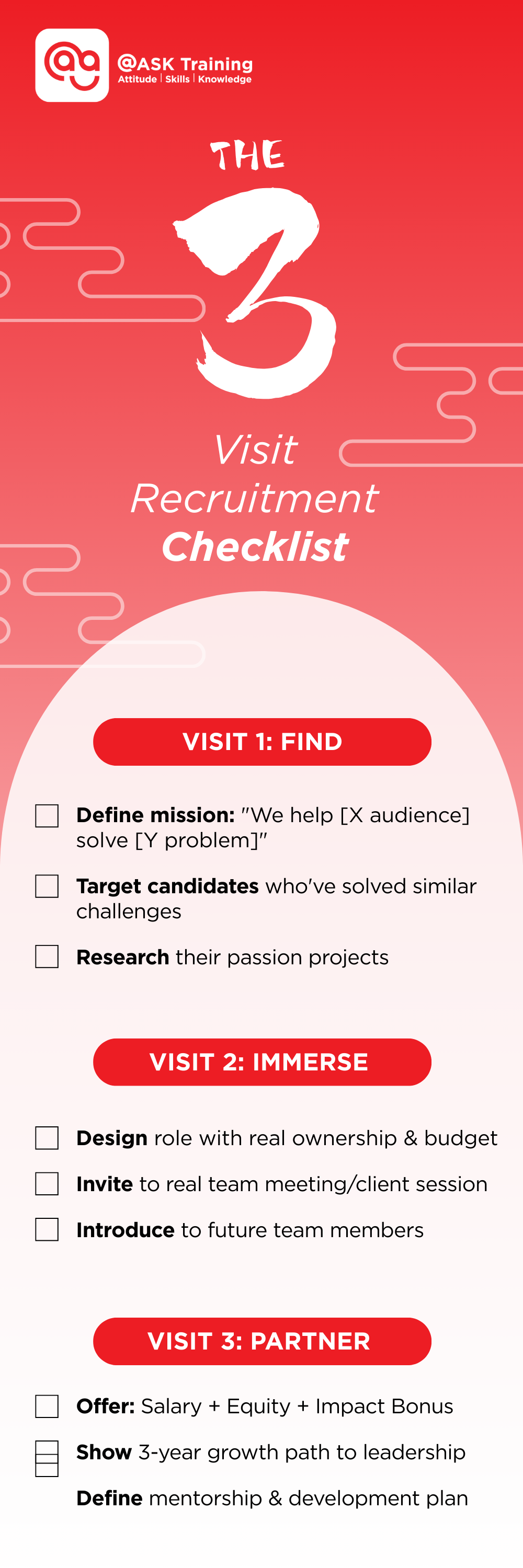
4. Your “Three Visits” Recruitment Playbook: A Practical Checklist
Turning this strategy into action requires a disciplined approach. The following checklist will ensure your recruitment process for a “Key Commander” is as strategic as Liu Bei’s.
Use this checklist to prepare your campaign for a “Key Commander.” This turns the abstract “Manpower” questions into a strategic recruitment plan.
Your “Three Visits” Recruitment Campaign:
PHASE 1: Foundation & Targeting (Before Contact)
Define Your “Why”:
- Can you articulate your organisation’s mission in one compelling sentence that would make top talent choose purpose over a paycheck?
Identify Your “A-Player”:
- Beyond their resume, what specific problem is this candidate uniquely passionate about solving?
- How does this connect to your most critical business need?
PHASE 2: Engagement & Experience (The Courtship)
Design the “Impact Role”:
- Does this position offer genuine autonomy, meaningful resources, and a clear mandate to build something significant?
Create the “Culture Immersion”:
- What specific experience will you design to demonstrate your values in action? (Examples: strategy workshop, client meeting, team problem-solving session)
PHASE 3: Partnership & Future (The Close)
Craft the “Legacy Offer”:
- Beyond base salary, what elements (equity, strategic autonomy, impact metrics) genuinely communicate “partnership” rather than just “employment”?
Map the “Growth Journey”:
- What specific milestones, mentorship, and advancement opportunities exist in years 1-3?
- How will you ensure they grow as the organisation grows?
This disciplined approach transforms abstract strategy into a tangible process, ensuring you are ready to build a team worthy of your vision.
Wrapping Up: Build a Kingdom Worth Joining
The ultimate lesson from Liu Bei remains timeless: Exceptional talent cannot be bought; it must be won. True A-players aren’t hired through transactions; they’re convinced through a shared mission and invited to build a lasting legacy.
So why does this 1,800-year-old story still resonate with today’s leaders across Southeast Asia and beyond? The answer lies in one essential leadership quality: Humility.
In Chinese culture, humility (谦虚) has been valued since the time of Confucius. It’s not weakness—it’s the wisdom to recognise that great achievements require great teams.
Liu Bei’s success serves as a masterclass in this virtue, proving that a leader’s sincere respect and clear vision can become their most powerful recruiting tools.
Remember:
- Recruitment isn’t just an HR task—it’s a core leadership responsibility
- True talent strategy integrates Vision, Culture, and Value into one cohesive system
- You’re not just filling positions—you’re building a legacy that outlasts the competition
Final Thought:
Liu Bei started with fewer resources than his rivals, but he built a kingdom that endured for generations. His secret? He understood that when you recruit people who believe in your mission, you don’t just build a team; you build something that stands the test of time.
Your Move:
This week, take these two simple steps:
- Identify Your Key Hire
- Pick one critical role you need to fill—whether it’s a tech lead, operations head, or policy director.
- Execute One Strategic Action
Choose just ONE of these moves:
- Rewrite your job description to focus on impact and legacy, not just duties
- Personally message one ideal candidate with a mission-focused pitch
The right talent is waiting for a leader with vision. Will that be you?
Continue Your Leadership Journey!
Missed our previous articles? Catch up on our Three Kingdoms Series! Be sure to follow us on TikTok (@3kingdomsacademy) for weekly leadership insights and for deeper training, join our Three Kingdoms Leadership courses:
- Three Kingdoms’ Leaders & Leadership (Cao Cao Chapter): Master decisive, results-driven leadership.
- Applying Three Kingdom Strategies in Your Organisation: Turn ancient tactics into your modern competitive advantage.
- Three Kingdoms’ Leadership in Today’s Context: Learn to solve complex modern problems with timeless wisdom.
- Sun Tzu’s Art of War for Modern Leaders: Master the classic principles of strategy for today’s business battles.
Start building your kingdom today. The right talent is waiting for a cause worthy of their gift! Stay tuned for our next article!